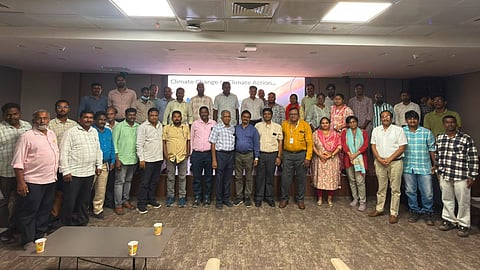

VIJAYAWADA: The Environmental and Social Management Unit (ESMU) of APCRDA, in collaboration with the Project Grievance Management Cell (PgMC) Capacity Building Team, conducted a training programme on Climate Change with Respect to Amaravati Capital City at the APCRDA Project Office on Tuesday.
The training was attended by Environmental Managers, Social and Labour Managers from Project Management Consultants (PMCs), contractor representatives, and members of the APCRDA ESMU team.
D Prem Kumar, Environmental Manager, TYPSA PMC, served as the resource person for the session. He provided an insightful overview of global climate change trends and their impacts on both the global and Indian economies. He highlighted the growing importance of climate-resilient infrastructure and emphasised the proactive measures being undertaken by the Government of Andhra Pradesh to address climate-related challenges.
During the session, Prem Kumar explained that the State Government is placing significant emphasis on sustainable and climate-resilient development.
He also noted the vision of the Chief Minister towards achieving Net Zero emissions by 2070 and elaborated on the initiatives being incorporated into the development of Amaravati to strengthen environmental sustainability and ecological balance.
Participants actively engaged in discussions and raised queries regarding the importance of climate-resilient infrastructure and sustainable urban development practices. The interactive session provided valuable insights into environmental stewardship and the role of stakeholders in building a resilient capital city.
At the conclusion of the programme, participants reaffirmed their commitment to environmental protection and sustainable development in Amaravati.
