
There are many ways to understand a city—some look up to the monuments; for others, it is how people eat. To understand the latter, you turn to the unseen choreographers of the dining room: the waitstaff. From the colonnades of Connaught Place to the boutique-lined lanes of Khan Market, Delhi’s dining scene is a theatre of human behaviour. Here, over piled plates in storeyed restaurants, the city lets its guard down, they say. For those on the floor, the patrons become a window into the sociology of a metropolis.
At Wenger’s in Connaught Place, there are no tables, no wait staff weaving through crowds, just a long, bustling glass counter where the daily drama unfolds. Mohit Sharma, a senior staffer with 15 years’ experience, sees the city through a pastry box. "Everyone stands in the exact same line here," he observes. " You have college students counting their pocket money, and you have businessmen in suits. Everyone is the same here—everyone wants it quick."
The patience of two minutes
The orders reflect Delhi's economic contrasts. "Chicken puffs and pineapple cake are the most ordered items," Sharma explains. "The puff is cheap and is the daily fuel for office workers and students. The pineapple cake is slightly more expensive. That is nostalgia. Families order it for birthdays and anniversaries."
Handling the daily rush takes a thick skin and a sharp memory. “People get impatient waiting in Delhi’s heat. They want everything packed in two minutes”, Sharma says dryly. “If a regular finds the chicken puff sold out by 4 pm, they take it personally. You have to smile, apologise, and steer them to try something else.”
A different kind of ritual unfolds at the iconic Saravana Bhavan. Here, the pace is relentless. Suryanathan M, who has been navigating the floor since 2009, can gauge a customer’s mood before they place their order.
Hot food cools tempers
"Most of our customers are polite, but in a city like this, sometimes they come in angry, stressed from the traffic or have an impending appointment," Suryanathan explains, balancing a tray of idiyappam. "At that time, we mentally prepare ourselves and greet them with a cheery demeanour and make them feel comfortable. Most importantly, serving the food hot always placates an annoyed customer.”
On an average weekday, we get around 400- 500 people customers; on weekends, that number swells to over 850. During rush hour, the restaurant is organised chaos. "It gets hard. We will have three or four tables vying for our attention at the same time, all with different orders," he says.
Yet, the menu remains a map of demographics. While the standard idli and vada are universally preferred by north Indians, “Tamilians from down south, almost always look for idiyappam. It’s a taste of home".
Over 70 percent of their footfall consists of regulars, Suryanathan has seen it all. His biggest frustration? "When a customer changes their order right after it has been sent to the kitchen. And what makes him happiest? “When a customer praises my service, that’s all I want," he says with a smile.
To smooth things over
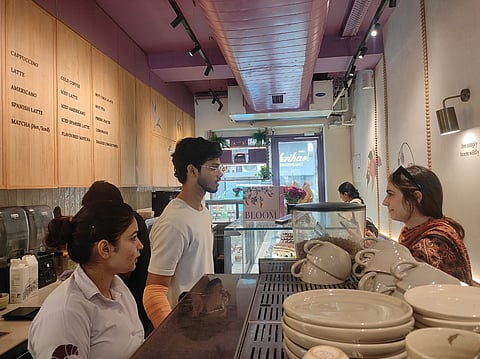
The scene changes in Khan Market where The Bloom Cafe, opened in 2021, caters to 80–100 patrons daily, drawn by its cosy, remote-work-friendly vibe. The hum of conversation mixes with customers typing on their laptop. Floor manager Shalu Chaudhary describes the clientele as a blend of middle-aged professionals treating the café as a second office, and older locals.
“Our tiramisu and coffee are the most in demand,” she says. But serving the affluent Khan Market crowd demands psychological agility more than physical hustle.
"Giving a customer your full attention - especially when they are angry or unreasonable is one of the core tenets," she says. "That’s where soft skills come into play."
“Older customers are often more demanding, requiring patience and understanding, but that, Chaudhary says, can also be endearing. “We might offer a complimentary drink to smooth things over, or tailor a dish to their preferences.”
“Once, a Kashmiri customer came in and ordered entirely in Kashmiri,” Chaudhary laughs.” We had to ask him to write down his order as no one could understand him. Customers like these keep the day interesting.” She notes a change in Delhiites’ eating habits: “Requests for no sugar, gluten-free, and low-fat options have become constant these days.”
Whether calming a frayed temper, managing a gluten-free order, or handing over a nostalgic pastry, Delhi’s servers witness the entitlement, exhaustion, and the joy a simple puff or coffee can bring. They know that behind every demanding regular and every lavish spender is a city of people just looking for a place to pause, be served, and feel taken care of, even if just for the duration of a meal.