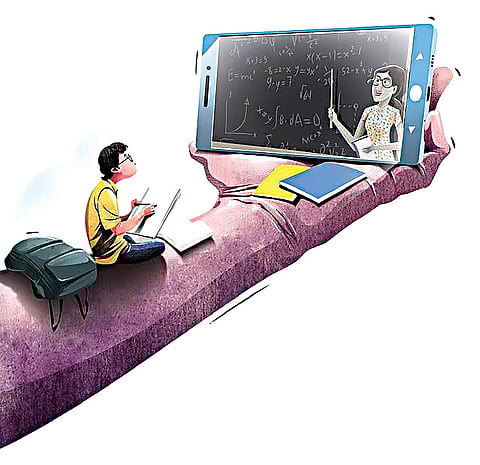

India’s push toward digital education accelerated during the pandemic, when schools and colleges turned to remote learning to maintain academic continuity. In the years since, the country has built a large digital education infrastructure through national platforms, television channels, and online course networks intended to reach students across school and higher education. The expansion of this infrastructure has been rapid, with millions of learners enrolling in online courses and thousands of digital learning modules now available across disciplines.
Yet the presence of platforms alone does not determine how widely digital learning is used. Internet connectivity, device access, and language availability remain critical factors shaping who can actually benefit from these resources.
Access conditions vary widely across the country. Smartphones and internet connections are now present in a majority of households, but computers remain far less common. Many students rely on shared devices or mobile phones to access lessons and study material, which can limit how easily they participate in digital learning activities.
Teacher preparedness is another factor influencing how widely digital tools are adopted in practice. Training programmes aimed at strengthening educators’ digital skills have expanded in recent years, reflecting the broader shift toward technology-supported learning environments across schools and colleges.
