
Ever since Prime Minister Narendra Modi declared after the Pahalgam massacre that “India will identify, track and punish every terrorist and their backers. We will pursue them to the ends of the earth”, questions lingered as to whether the objectives of Operation Sindoor to render justice for the heinous crime had been fully achieved. India’s kinetic action against nine terror bases in Pakistan snowballed into a four-day clash with the neighbour. So, how did it end? If it was bilateral, why was President Donald Trump not told off for attributing it to US mediation? How many aircraft did we lose? And what about the perpetrators? Coincidentally, the last question got resolved the day parliament began debating the matter, as three terrorists who executed the Pahalgam plot, including its mastermind, were eliminated in a gunfight in Kashmir. All three were Lashkar-e-Taiba (LeT) operatives. Then came the US state department’s announcement proscribing Pakistan-based The Resistance Front (TRF), an LeT proxy that had claimed responsibility for the Pahalgam attack. By the time the debate concluded in parliament, a UN Security Council report had named TRF as the culprit. For a bystander, it looked like smart choreography, intentional or otherwise.
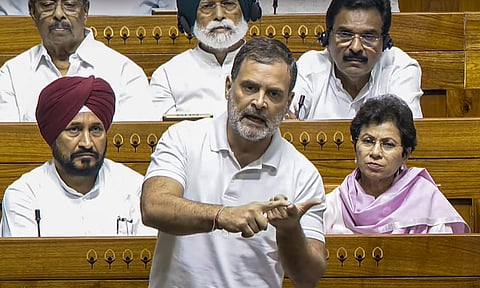
The three days of debate in parliament on Operation Sindoor saw a lot of sound and fury. Clearly, the national consensus against cross-border terror that had emerged in the wake of the attack had run its course. Reality TV played out in people’s drawing rooms with drama, nationalism, whataboutery and some sharp speeches. If Congress leader Rahul Gandhi accused the government of surrendering the initiative by calling up Pakistan shortly after bombing its terror havens and saying they were non-escalatory, Modi said no world leader had asked him to stop Operation Sindoor. He went on to accuse the Congress of taking talking points from Pakistan.
In the end, hardly anything new emerged from the debate except finger-pointing. What purpose the opacity on fighter jet losses serves in advancing national security was unfathomable. A joint resolution at the debate’s conclusion would have tempered the discourse. But there was no such agreement, allowing parties on both sides of the aisle to go after each other’s throats. It was an opportunity lost to put up a united front at a time when the global geopolitical situation is extremely fragile.
