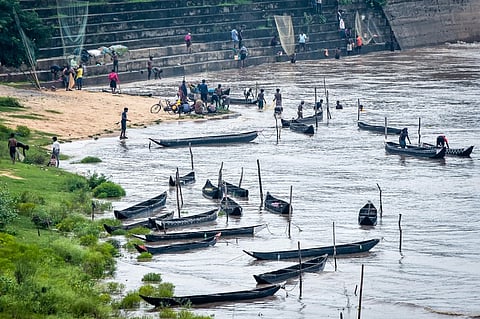

The dispute between Odisha and Chhattisgarh over the Mahanadi river water finally seems headed towards an amicable resolution, if the recent warmth between the two states is anything to go by. Both have informed the Mahanadi Water Disputes Tribunal of their intent to hold high-level discussions in the coming months.
In July, Chief Minister Mohan Charan Majhi had written to his Chhattisgarh counterpart Vishnu Deo Sai, proposing that a joint panel under the supervision of the Union water ministry be formed to settle the issue through dialogue. Sai’s prompt reciprocation has cleared the way for a chief secretary-level meeting next month, to be followed by a meeting between the two CMs in December.
Disputes over river waters are nothing new in India. Over the decades, the Centre has set up nine inter-state water dispute tribunals under the Inter-State River Water Disputes Act, 1956. Most have been mired in protracted litigation over project-specific concerns, stretching on for decades with little to show by way of results.
The Mahanadi conflict erupted in 2016, when the then BJD government accused Chhattisgarh, the upper riparian state, of going ahead with a series of dams and weirs upstream without any consultation. Odisha argued that Chhattisgarh’s water drawal could rise steeply from 8.3 million acre feet to 27 million.
With 47 percent of the Mahanadi’s 1.41 lakh sq km catchment located in Odisha, the downstream impact was inevitable. Studies have shown that flows into the Odisha basin have reduced, leaving large stretches of the river dry during non-monsoon months. Compounding this has been Odisha’s own failure to harness water adequately over the years.
The larger threat, however, is climate change, which is already triggering extreme weather and unpredictable rainfall. The river will bear the brunt—its course altered, its rhythms disrupted, its floods and droughts more frequent in the years ahead. In the meantime, the Mahanadi tribunal has achieved precious little in its seven years of existence. Against this backdrop, the two states choosing dialogue over deadlock is welcome—helped, no doubt, by the fact that both are BJP-ruled. When the CMs sit across the table, the process must be time-bound and Odisha’s interests firmly safeguarded. For it has the most to lose.
