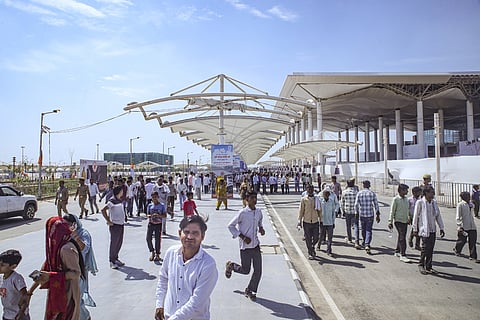

The airport recently inaugurated by Prime Minister Narendra Modi at Jewar outside Delhi is the country’s 165th. It’s a milestone towards India’s ambitious target of flying over a billion passengers annually by 2047 and operationalising 350-400 airports across the country. It’s true that a nation as vast and populous as India needs an extensive aviation network to complement its other mass transit systems. While the government’s ambition is well placed, it must ensure that the economics of the expansion is aligned with the ground reality.
The Union civil aviation minister recently announced India is set to induct 1,700 new aircraft to add to the existing fleet of over 1,200. By 2036, the country is expected to have around 3,000 aircraft if geopolitical tensions do not delay deliveries. Aircraft that were expected to be delivered in 10 years may now take up to 15 years. To operate such a large fleet, the country would require 10,000-12,000 more trained pilots, nearly double the current number. The aviation industry, which is estimated to support around 7 million jobs directly and indirectly at present, has the potential to generate 3.5 times more employment.
Infrastructure is not the primary challenge today, as the government has been generous in funding the sector. The bigger issue is the commercial viability of airline operations. India’s aviation sector is currently a duopoly with IndiGo cornering 63 percent of the market and the Tata Group claiming 25 percent. The risk of one airline carrying almost two-thirds of passengers was amplified last December when IndiGo’s operational issues rippled across the sector and affected lakhs of passengers.
The sector needs greater competition—a more balanced market with at least one more airline commanding over 10 percent market share—to help expand the overall pie. The government has attempted to improve regional connectivity through the UDAN scheme. However, a parliamentary panel noted last week that of the 657 routes awarded, over 150 remain uncommenced. Airlines also stop operations at most smaller centres when the subsidy to fly those routes ends. The government would not want to be left with ghost airports and unviable routes. Therefore, while the push for aviation is necessary, the government must not lose sight of its economic viability and balance.
