
During the Supreme Court hearing on challenges to those declared ineligible to vote after the special intensive revision in West Bengal, Justice Joymalya Bagchi observed that “even if a person is excluded and is unable to vote in this election”, they can be included later if appellate tribunals consider their exclusion unjustified. The statement was made in the context of the appeals process for voters who remain excluded after verification is completed.
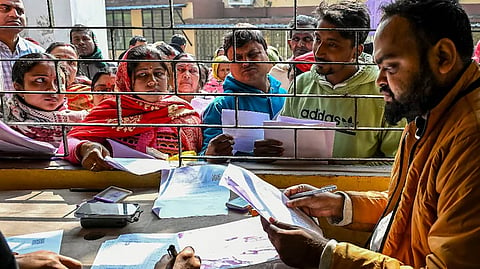
The context is marked by numbers. Over 60 lakh voters were placed under adjudication and nearly 45 percent of the adjudication cases disposed of entered the excluded list. These names don’t figure in the supplementary lists and won’t be able to vote in this election. Under Election Commission guidelines, voters have 15 days to file appeals before 19 appellate tribunals set up to hear them. The scale and urgency have led political parties to set up local committees to assist voters in filing appeals. The Commission says the tribunals “shall cease to exist after all appeals are disposed of”, meaning the process has no specified deadline.
Justice Bagchi’s observation, concerning these excluded voters, is grounded in the Representation of the People Act, 1950 which permits continuous revision of electoral rolls through claims, objections and appeals. Being left out in one round does not cancel a person’s right to register if later found eligible. Courts have consistently held that elections must continue on schedule, even when mistakes occur in the process.
Yet, when exclusions affect lakhs of people, the question arises whether voters truly had a chance to challenge removal before the election. Articles 14 and 21 require that election officials act fairly and follow proper procedures. A process that causes large-scale, time-limited exclusions may still raise doubts about whether these rules are properly followed, even if formal remedies are available.
The core issue is not the availability of post facto remedies but whether the SIR’s design and timing ensured a real and effective opportunity to be heard before disenfranchisement in a live election. Similar is the plight of party candidates on the adjudication list, who wonder whether they can contest if they remain excluded. Justice Bagchi’s formulation preserves the legality of subsequent correction. Yet the inability to vote or contest in a specific election, once lost, cannot be retrospectively restored, making the present exclusions a matter of immediate constitutional significance.
