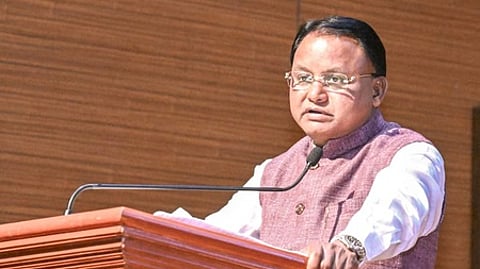

The Mohan Charan Majhi government has quietly shaken up social dynamics in Odisha by enhancing reservation for members of Scheduled Castes, Scheduled Tribes and socially and educationally backward classes (SEBCs) in medical and technical education. From 20 percent earlier—12 percent for STs and 8 percent for SCs—the total quota has now jumped to 50 percent. With 22.5 percent for STs, 16.25 percent for SCs and 11.25 percent for SEBCs, reservation in Odisha now reflects the levels in other states with similar social structures.
Coming after decades of demanding proportional representation, this is a moment of reckoning for historically disadvantaged groups in the state. In 2015, reservation for the SC and ST communities was raised to 38.75 percent in general higher education, but medical, engineering and other technical institutions were kept out of the move. The wait was even longer for SEBCs, a section that mostly overlaps with the other backward classes. Despite accounting for 54 percent of the population, reservation for the group was kept at 11.25 percent to stay within the overall ceiling of 50 percent mandated by the Supreme Court in the Indra Sawhney (1992) case. A 2023 survey by the Odisha State Commission for Backward Classes revealed that just about 22 percent of SEBC members had cleared matriculation and intermediate to hold technical diplomas. The structural correction should, at long last, open the doors of technical professions to many more in the community.
While OBC groups rejoice and the state government draws appreciation from across party lines, it must be noted that the action aligns closely with the BJP’s social reengineering strategy. Across India, OBCs have emerged as a key constituent of the national party, and by extending reservation to them in technical education through the SEBC classification, the BJP government is consolidating its broad social coalition in Odisha just a year before rural and urban body elections, even while addressing a longstanding demand. It goes to show how closely social justice and pre-poll policy shifts are often intertwined in India. The Odisha government must ensure that this reservation reset practically improves social mobility and equality on the ground, rather than be seen as a mere move to gain votes.
