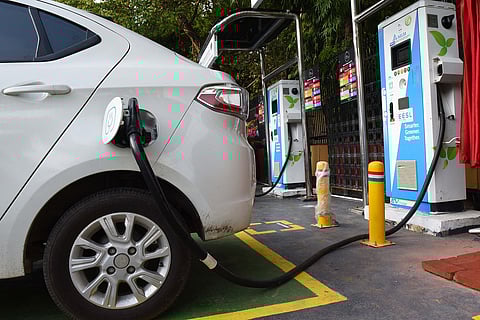

India's transition to e-mobility has been picking up over the past five years. Electric vehicles have ceased to be a metro-only phenomenon; cities such as Surat, Jaipur and Lucknow are now driving the change towards cheaper and cleaner mobility. The technology has also been democratised to include three-wheeler autos and two-wheeler delivery bikes. A subsidy scheme that closed in 2024 incentivised the sale of 16,15,080 EVs; it has been replaced by a new scheme. The government appears well on its way to achieving the goal of 30 percent EV sales penetration by 2030.
Facing increasing vehicle pollution, most states are in a race to offer sops ranging from road tax and registration fee exemption to subsidies. The latest to update its support scheme is Delhi, consistently one of the most polluted cities in the world. It has mandated that all new three-wheelers registered from January 1, 2027 will have to be electric and no petrol two-wheelers will be registered from April 1, 2028.
Other cities that frequently report hazardous air quality, such as Mumbai and Kolkata, must also switch to EVs in a phased manner. China’s determined war on pollution—declared around the 2008 Summer Olympics in Beijing, with the 2022 Winter Olympics as a deadline—is worth emulating. Between 2009 and 2023, China is estimated to have spent around $231 billion developing its EV industry. Today, it’s the global leader in their components, manufacture and use.
One roadblock to EV growth in India is the inadequate network of charging and battery-swap stations. Karnataka, which hosts several major EV manufacturers and startups, has the largest network of over 5,700 stations. Private companies are now partnering with the government’s National Highways for EV programme to set up 72,000 fast-charging stations, aiming for one every 25 km along 50 highways. To achieve its 2030 objective, the country will need 25-30 lakh charging points, with at least 13 lakh public stations.
If the environment is the main reason to swerve towards EVs, recycling and disposal of batteries needs to be stepped up, along with ensuring more clean power supply to meet the rising demand. The question is not whether India will take up these challenges—it’s only about when and in what manner.