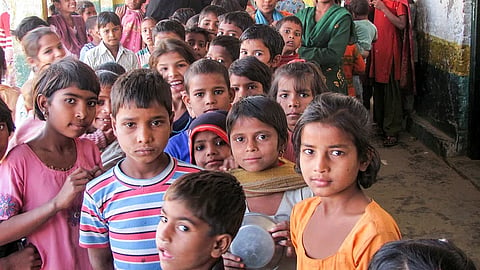

More girls than boys were adopted in India in 2025-26. Official figures show 2,574 girls and 2,448 boys finding adoptive families. The difference is not large, but it is noteworthy in a country where discussions on gender have long centred on son preference and discrimination against daughters. Since adoption is a conscious choice, the numbers suggest a possible change in how families view the girl child. The figures do not explain the reasons behind this shift, but they do raise questions about a long-held assumption in discussions on gender.
The rise in girl-child adoptions comes as overall adoptions have also increased. For the first time in more than a decade, India crossed the 5,000 mark in a year. Data shared by the Central Adoption Resource Authority (CARA) shows that 5,022 children were adopted in 2025-26, including 4,685 through domestic adoption and 337 through inter-country adoption. This was higher than the 4,515 adoptions recorded in 2024-25.
The increase, however, also highlights the challenges within the adoption system. Nearly 26,000 prospective adoptive parents are registered with CARA. However, parents wanting to adopt a child below two years wait three and a half years. The central challenge is the pace at which children who cannot be reunited with their biological families are declared legally free for adoption and matched with waiting parents. Protecting the rights of biological families is essential, but avoidable administrative delays postpone a child’s opportunity to grow up in a permanent home.
Equally noteworthy is the 25 percent increase in the adoption of children with special needs. These children have traditionally faced greater barriers in finding permanent families. The trend suggests that more families are willing to look beyond age, gender and disability while adopting a child. If sustained, this could become one of the most meaningful changes in India’s adoption landscape.
Greater transparency from CARA, including state-wise details on waiting periods, children declared legally free for adoption and adoption outcomes, would help policymakers distinguish social change from administrative progress and design better reforms. The record of 5,022 adoptions is, therefore, not just an administrative achievement. It points to an India that is becoming more open to adoption, more accepting of daughters and more willing to embrace children with special needs. Public policy must now keep pace by ensuring that every child who needs a family finds one without unnecessary delay.
