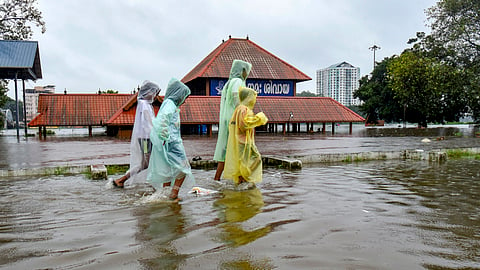

Fifteen dead and seven missing. That’s the human toll in the latest episode of Kerala’s continuing series of monsoon disasters. However, the numbers barely tell the real story. The unsettling truth is that the torrential rains caught the state off guard yet again, struck widespread panic and caused severe flooding and landslides, destroying lives, livelihoods and properties. The sudden heavy rainfall tested Kerala’s disaster preparedness as well as its capability to handle the aftermath, and it must be said that, on both counts, the authorities concerned were found sorely wanting.
Kerala’s rainfall pattern has changed significantly since the early 2000s, showing a marked transition towards short-duration, high-intensity cloudburst-like events. The devastating floods of 2018 highlighted this extremity caused primarily by climate change. Since then, Kerala has been dealing with rain disasters almost every monsoon. This season was relatively low-key till the sudden downpours on July 31. Over the next three days, Kerala received an average rainfall of 18.4 cm, more than three times the normal for the period, with several locations recording up to 30 cm over just 8 hours.
It’s time we learnt to live with the changed patterns of the monsoon. It’s not just Kerala—the entire country is currently at the mercy of nature’s vagaries. The unprecedented wave of floods in Assam has already claimed 66 lives and affected more than 7 lakh people. While 35 people have died in rain-related incidents in Gujarat, the flood situation in Odisha is still said to be serious. Flash floods have also been reported in Jammu & Kashmir and Chhattisgarh.
The monsoon shapes India’s economy, agriculture, water supply and cultural identity. Yet, the country has come to dread the rains. The disaster in Kerala again highlighted a significant shortcoming: the lack of a reliable weather prediction system. Forecasts proved to be inaccurate and alerts unreliable, exacerbating a critical situation.
These calamities should serve as an opportunity to completely transform India’s approach to disaster management. It’s essential to transition from a reactive emergency response to a proactive one with a focus on advanced early-warning systems. The increasing unpredictability of weather is real; it must be met with greater accuracy in forecasting. Disaster preparedness and management are the duty of the government. Ordinary citizens should not have to suffer the consequences of systemic failures.
