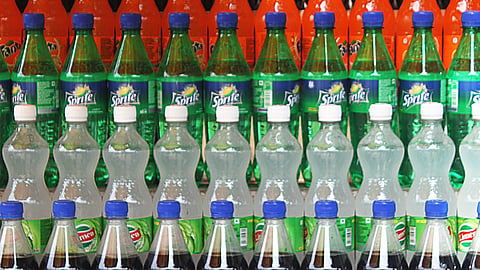

After the Supreme Court directed the government to introduce health warning labels on the front of junk food packets and drink bottles, the Food Safety and Standards Authority of India (FSSAI) has pledged to follow through on it. On Friday, the regulator proposed mandating hexagonal labels for products high in saturated fat, sugar, or salt—similar to warnings required in dozens of other countries. It’s worrying that India, where the National Institute of Nutrition has warned for years about excessive amounts of these ingredients in ultra-processed food, took so long to act. In July, the Indian Council of Medical Research formed the Let's Fix Our Food consortium to raise awareness that such ingredients increase the risk of diabetes and other non-communicable diseases. But it took a nudge from the top court for the government to finally agree to the measure.
This raises the unsavoury question of whether successive Indian governments have allowed a lower safety standard for food and drinks sold in the country. Two years ago, when regulators in Singapore and Hong Kong stopped sales of packaged masalas from two top Indian brands because of unsafe amounts of a cancerous pesticide, rather than ordering extensive testing at home, the government only informed the Rajya Sabha that the hazard was limited to a few batches. The image of a health warning stuck on a packet of Indian Maggi sold in California caused alarm on Indian social media. Last week’s report that a bottle of the fizzy drink Fanta sold in Delhi contains thrice as much sugar as it does in London attracted caustic comments from food influencers online.
Now that the FSSAI has agreed to front-of-pack warning labels, it must make them understandable to all Indians. To “facilitate informed food choices”, as its court filing promised, the regulator must ask companies to print legible warnings about recommended daily portions. A scannable QR code can provide access to more information in all Indian languages.
A recent study published in The Lancet estimated that as many as 45 crore Indians could be obese or overweight by 2050. Expensive weight-loss drugs are increasingly eating into household budgets across the country. To follow the Supreme Court’s call to “let the world know India cares about its citizens’ health”, the government must sincerely act on advice that its own experts have been serving up for years.
