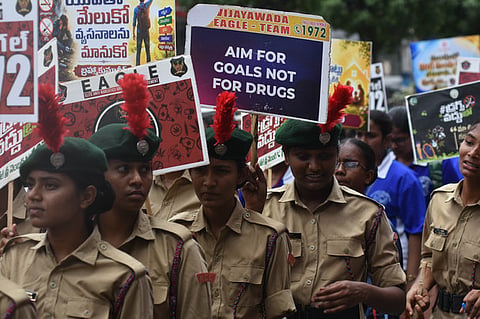

The true picture concerning drugs is scarier in Telangana—especially in capital Hyderabad—than it may seem at first glance. The Narcotics Control Bureau’s 2025 report shows that while the number of narcotics-related cases touched a five-year high of 1.48 lakh across the nation, it was at 2,542 in Telangana. Though the latter may not appear alarming when compared to the national total, what’s worrying is its surge despite a crackdown and the cases that may not have been recorded.
After Chief Minister A Revanth Reddy declared zero tolerance on drugs and set up the Elite Action Group for Drug Law Enforcement or EAGLE, the force has done a commendable job in breaking up supply chains, freezing bank accounts and cutting the tentacles of the drug mafia from Hyderabad to Goa and other states. Educational institutions have been mandated to put in place anti-drug committees and Prahari Clubs to create awareness, detect suspicious activity in the vicinity of campuses and stop usage among students.
While all these moves are bearing fruit, an objective view requires that we dig deeper. Facing increased surveillance, the drug mafia has adopted decentralised operations. EAGLE has caught pushers openly using social media apps and seeking to sell drugs by the side of roads in the IT Corridor and other places. There are several cases of door-step deliveries, too. Apart from cannabis, the substances traded include heroin, cocaine, MDMA, crystal meth and various opioids.
The authorities’ problem is two-fold. On the one hand, supplies from Asian regions like the Golden Crescent to India’s west and Golden Triangle to the east are augmented by flows from Latin America, Africa and Europe. The Centre’s goal of eradicating the drug menace by 2029 and the state’s strict policy have been disrupting these supply chains. But an equally big challenge is on the demand side. We should not treat this as just a law-and-order issue.
Frequent large-scale campaigns directed at parents and students are a must. The tragic stories of users and their successful recoveries must be made mainstream. If we do not act collectively, the future may turn bleaker given that the quality and number of de-addiction centres, especially in smaller towns, are far lower than what’s required. There is no time to lose.
