
New Delhi appeared vindicated last week after reports emerged that a US-led investigation found no evidence linking Indian government agents to the 2023 killing of Khalistani separatist Hardeep Singh Nijjar in Canada. The investigation reportedly traced the intelligence input to communications involving a rogue R&AW officer who had allegedly plotted the murder of Gurpatwant Singh Pannun, another Khalistani separatist based in the US. After the conspiracy surfaced, the officer was taken into custody and his associate pleaded guilty in the US. Investigators then followed the evidence across multiple jurisdictions. Their findings reportedly concluded that the Nijjar assassination was ordered by gangsters Lawrence Bishnoi and Satinderjeet Singh alias Goldy Brar, not by the Indian state. Bishnoi remains in an Indian jail, while Brar is a fugitive.
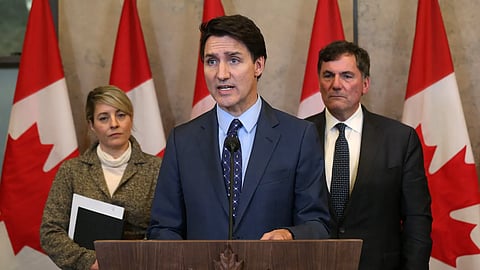
The findings cast the diplomatic rupture that followed in a different light. Then Canadian prime minister Justin Trudeau chose to publicly accuse India before the evidentiary record had been established, raising the issue with Prime Minister Narendra Modi during the G20 summit in New Delhi. The allegations triggered an unprecedented breakdown in bilateral ties, with relations improving only after Trudeau left office. His successor, Mark Carney, has rightly sought to prevent one issue from holding the relationship hostage. Significantly, his government has identified violent Khalistani extremism as a national security concern, while the Canadian Security Intelligence Service has maintained the distinction between lawful advocacy for a separate Khalistan and violent extremism.
India has consistently argued that countries must work together against violent extremism and transnational criminal networks, irrespective of ideology. The reported findings broadly reinforce that position. They also underline a principle that extends beyond this case. Intelligence may warrant investigation, but it cannot substitute for proof. Democracies undermine both the rule of law and diplomacy when allegations harden into official conclusions before the evidence is tested. If the findings withstand scrutiny, they vindicate New Delhi’s long-standing insistence that conclusions must follow facts—not political expediency. The larger challenge, for India and its partners alike, remains dismantling the criminal networks that exploit extremist causes for violence and profit.
