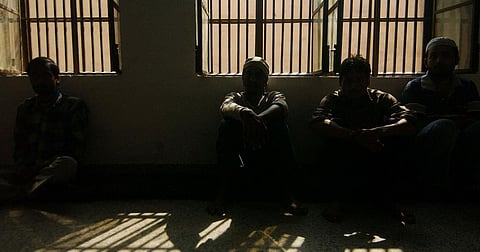

The Supreme Court last week addressed one of the most pressing humanitarian concerns in India’s criminal justice system. In its verdict on a plea by the National Legal Services Authority (Nalsa), Justices Vikram Nath and Sandeep Mehta directed all states and Union territories to frame policies for the early release of elderly (aged 70 and above) and terminally ill prisoners. Grounding its judgement in the fundamental rights to equality before the law and to life and liberty, the Bench also called for framing technology-enabled processes to minimise delays for such release. A recent Nalsa study identified 5,393 prisoners who would qualify, including 1,886 undertrials.
This is a welcome intervention in a nation of perennially overcrowded prisons. Reportage by this newspaper in the 1980s changed the public’s perception about the conditions behind bars. Journalist Ashwini Sarin got himself arrested on a frivolous charge to spend a few days in Tihar jail and see the situation first-hand. The series of reports that flowed from the investigation highlighted overcrowding, corruption and systemic ills behind the jail gates. Prolonged detention—especially of those not yet convicted—compounds the indignities in such conditions.
Indeed, India’s criminal justice system continues to privilege detention over swift investigation and adjudication. Though overcrowding was reduced to 120 percent of jail capacity in 2023, down from 131 percent the year before, three in every four prisoners are undertrials. Making matters worse is the lopsided distribution of carceral facilities, which is more a reflection of the historical evolution of the criminal justice system than of present requirements. Only six states—Rajasthan, Tamil Nadu, Madhya Pradesh, Andhra Pradesh, Odisha and Uttar Pradesh—account for more than half the country’s jails. On the other hand, overcrowding in Meghalaya, Madhya Pradesh, Maharashtra and Uttarakhand has crossed 140 percent.
Only 15 states have separate jails to house women inmates.If we have to move towards reformative justice, we have to rethink our sentencing and penal system. The focus should be on reducing the number of inmates and treating those behind bars with dignity. We can learn from the Americas that expanding prisons does not improve enforcement outside their walls. Now that the Supreme Court has made a humane intervention, all governments must forthwith frame policies and medical guidelines to evaluate illnesses as terminal. For a ruling that has come none too soon, there’s no time to lose.
