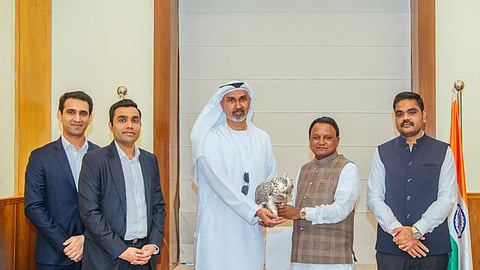

The first Investment Friendliness Index released by Niti Aayog has come bearing good news for Odisha. Its national ranking of fourth among the large states is an endorsement of its credibility and the Mohan Majhi government’s endeavours to market the state aggressively before domestic and global investors. Over the past two years, the state government put together an investment pipeline of over The Niti Aayog report also serves as a timely reminder that investment intents and MoUs are only the beginning, pointing at institutional ambience and regulatory ease as areas that need improvement. Delay in environmental clearances and limitations of the single-window system, inadequate logistics infrastructure and weak contract enforcement continue to weigh on investors’ minds. Land acquisition for big projects is another weak area that the government needs to pay adequate attention to improve. In aviation, though the state has rapidly grown its infrastructure, restricted connectivity is keeping the sector from taking off.
The advantages Odisha enjoys over several other states—abundant mineral resources, fiscally-resilient government finances and political stability—can surely help it expand the industrial base. But its biggest challenge lies in execution. The Majhi government has succeeded in attracting investors. Its next—and more important—task is to ensure that the projects hit the ground without delay, and generate the employment and economic transformation they promise. Good ranking builds confidence, but timely execution builds a reputation to last ₹20 lakh crore. Recent proposals include a ₹1.10-lakh-crore IHC-Adani joint venture in aluminium billed as the state’s largest foreign direct investment. The expansion plans of Vedanta and the Aditya Birla Group also highlight India Inc’s confidence in the state’s industrial ecosystem.
Niti Aayog notes the advantages of Odisha’s resource availability as well as its fiscal health. The state tops in the production of metallic minerals and coal, while its low borrowings and other liabilities have put it in a better economic shape than most others. Of greater significance is the changing composition of the investment pie. While mining and metals continue to dominate, sectors such as green technology, semiconductor materials, aerospace, defence and precision manufacturing are beginning to occupy more space. Earlier this month, the government signed a memorandum with Haryana-based Acme and Japan’s IHI for multiple clean energy projects. That’s precisely the direction Odisha must pursue.
The Niti Aayog report also serves as a timely reminder that investment intents and MoUs are only the beginning, pointing at institutional ambience and regulatory ease as areas that need improvement. Delay in environmental clearances and limitations of the single-window system, inadequate logistics infrastructure and weak contract enforcement continue to weigh on investors’ minds. Land acquisition for big projects is another weak area that the government needs to pay adequate attention to improve. In aviation, though the state has rapidly grown its infrastructure, restricted connectivity is keeping the sector from taking off.
The advantages Odisha enjoys over several other states—abundant mineral resources, fiscally-resilient government finances and political stability—can surely help it expand the industrial base. But its biggest challenge lies in execution. The Majhi government has succeeded in attracting investors. Its next—and more important—task is to ensure that the projects hit the ground without delay, and generate the employment and economic transformation they promise. Good ranking builds confidence, but timely execution builds a reputation to last.
