
Last week’s revision in GDP growth for January-March 2026 at 7.8 percent came as a pleasant surprise, given that the markets had expected it to be 7-7.4 percent. It suggested that large sections of the economy remained insulated from the effects of the Gulf war that erupted at the end of February. Growth was largely driven by a robust performance in services, particularly in trade, hospitality and communications, as well as in the finance and IT sectors. A closer look, however, revealed signs of stress in manufacturing, which recorded its slowest quarterly growth of 7.3 percent in the year. Private consumption, which accounts for nearly 57 percent of GDP, also indicated moderation. Growth in inflation-adjusted private consumption eased to 7.1 percent in Q4 from 8.2 percent in the preceding quarter.
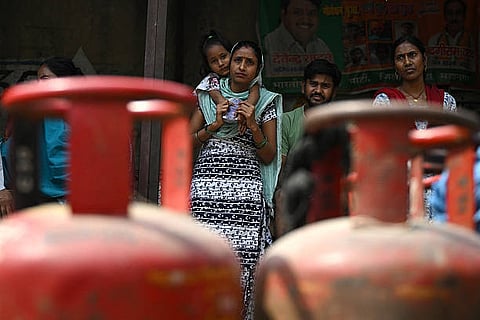
The effect of rising fuel prices, which hit the streets of India in May, will become more evident in the current financial year—and the increases may not be over yet. On Saturday, the government raised LPG prices by another ₹29 per cylinder, citing a sharp increase in costs that outstrip the retail price. It has also pointed out that despite the raised petrol and diesel prices, the oil marketing companies are incurring daily losses of around ₹600 crore. Unless the West Asia conflict moves towards a dependable resolution—a hope not strengthened by Monday’s uncertain pause in the exchanges between Iran and Israel—the crude oil benchmark may remain above $95 a barrel in the near future. The forecast of a sub-par monsoon further complicates the outlook on rural demand.
The government’s recent moves to reduce excise on fuel and exempt foreign investors from taxes on government securities investments may not fully cover the ground. It’s time to double down on administrative reforms and fast-track stalled infrastructure projects. Industry associations must help smaller firms to make the best out of the Oman free-trade agreement that kicked in this month and the ones with the UK and New Zealand that are expected to be implemented down the fiscal. It may also be time for bolder measures like rationalising revenue expenditure and improving realisation from the National Monetisation Pipeline 2.0 to create greater room for investments. Whatever the mix of measures, the time for growth euphoria is coming to a halt.
