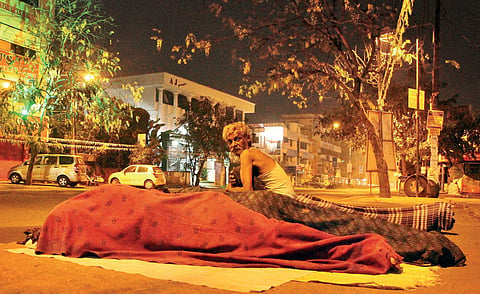

Delhi's disgraceful record as the country’s rape capital came under a harsh spotlight again on Monday. A 29-year-old cab driver allegedly kidnapped an 11-year-old daughter of migrant workers while she was sleeping on a pavement in south Delhi. When the police tracked down the cab, they found that the cabbie had picked up another ride after raping and murdering the adolescent, as if it was business as usual. The accused was later shot in the leg allegedly while attempting to escape during an on-site reconstruction of events.
Apart from the national capital’s grim reputation, it also brings into focus the fact that atrocities on women and children of migrant worker families are on the rise across the nation. The recent rape and death of a toddler in Tamil Nadu’s Tiruvallur was another case in point, as was the rape of an underage girl in Telangana’s Peddapalli district. Couple this with the fact that by the end of November 2025, there were 31.4 crore migrant workers registered on the eShram portal—and the scale of vulnerability becomes clearer. Flung far from home and often struggling to communicate across a language barrier, these builders of modern India are mostly treated as second-class citizens in their own country. The Delhi police should be commended for acting swiftly to apprehend the accused, but given that what works as deterrent is the certainty of a swift conviction, they need to exercise caution while seeing this case to its judicial conclusion.
Will public opinion flare up the way it did after the 2012 gangrape and murder of a 22-year-old physiotherapy intern not far from where the 11-year-old was abducted? That convulsion had led to amendments in criminal laws, with new offences recognised, victim protection enhanced and more stringent punishments prescribed. Will it bring people on the streets like the 2024 rape and murder of a 31-year-old physician in Kolkata’s R G Kar Medical College and Hospital did? That churn ultimately contributed to the regime change in West Bengal. We do not know yet the level to which public anger will rise this time. But those who assume that their individual protests will be drowned out would do well to look back at those cases and remember what can happen when voices unite in demanding accountability. After all, there is no bigger duty than to protect the most vulnerable among us.
