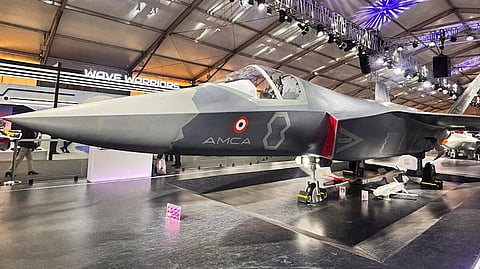

The deadlock over General Electric’s F414 engine pricing is far more than a commercial dispute. It is a reminder of a hard truth India has spent decades trying to escape: strategic dependence carries strategic costs. As reported first by this newspaper, GE is seeking nearly three times the originally estimated price for the engines that will power the Advanced Medium Combat Aircraft (AMCA), India’s flagship fifth-generation fighter programme.
The issue is not merely the cost of 15 engines needed for prototypes. The F414 is expected to power Tejas Mark II, a twin-engine fighter and the initial AMCA variants, potentially locking India into a requirement for more than 200 engines over the coming years. This is precisely the vulnerability that defence atmanirbharta was meant to address. Once a platform is designed around a foreign engine, radar or weapon system, the supplier acquires leverage. Costs escalate, timelines slip and negotiations become asymmetric because switching suppliers midway is often prohibitively expensive.
The irony is striking. At a time when India is emerging as a defence exporter, with BrahMos missile sales expanding its footprint in Southeast Asia, it remains heavily dependent on foreign suppliers for some of the most critical technologies. Part of the problem lies in a persistent misunderstanding of technology transfer. Manufacturing under licence is not the same as mastering a technology. India has assembled aircraft for decades, yet genuine design capability in critical areas such as engines remains elusive. Technology agreements often transfer production knowhow, not the deeper ecosystem of research and knowledge that can create the next generation of products.
However, domestic institutions cannot escape scrutiny. Hindustan Aeronautics Limited’s repeated delays in aircraft deliveries have undermined confidence and complicated force planning. Self-reliance cannot become an excuse for inefficiency. Indigenous capability must be accompanied by accountability, speed and execution. The challenge is becoming tougher as technology controls tighten globally, whether for artificial intelligence, semiconductors or defence systems. India cannot assume that access will always be available.
Defence atmanirbharta, therefore, demands sustained investment in research, greater private-sector participation, acquisition of critical technologies where possible and a willingness to build capabilities that may take decades to mature. The F414 dispute is not merely about engines. It is about whether India can finally break the cycle of dependence that keeps strategic autonomy perpetually out of reach.
