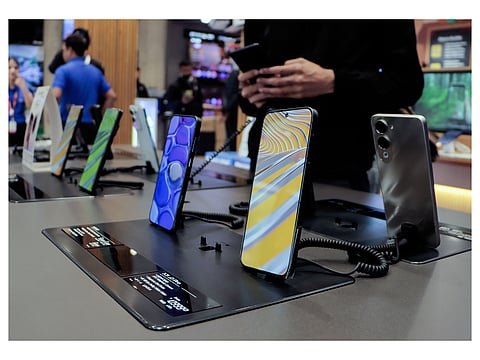

Despite years of efforts, India’s electronics manufacturing industry is stuck in the ‘assembly trap’. Even though the production and export of mobile phones is often regarded as a success story, the reality is that a significant chunk of their components are imported and assembled. Moreover, we are unable to replicate the same kind of success in other categories such as television sets, laptops and tablets. Consequently, electronic imports exceeded exports by about 2.4 times in 2025-26, according to government data. With exports at only $47.69 billion against imports worth $116.18 billion, the trade deficit in the sector widened to $68 billion. This happened even as the sector emerged as one of the largest exporters, contributing about 11 percent of India’s total.
One of the reasons for this weakness is low domestic value addition of only 18-20 percent, while the remaining 80 percent of value is mostly derived from imported components like displays, printed circuit boards, camera modules, connectors and capacitors. For us to transition from assembly-led growth to component-led manufacturing and move up the global value chain, we need a multi-tier supplier ecosystem like those in China and Vietnam. While the government is doing its bit with initiatives like component manufacturing clusters, their scale needs to be much bigger to outgrow the existing manufacturing hubs. Besides efforts at improving research and development, India must boldly experiment with frontier technologies rather than merely focusing on established architectures. That way, we can stand a chance at emerging as a leader in evolving areas. Take the automotive industry, for instance. Given the rise of electric vehicles, advanced electronic systems, whose use may double from the current 20 percent of a car’s value in the coming decade, offer a good opportunity.
While supplier ecosystems are essential, India also needs to work on the inverted duty structures and complex tax laws that make it more expensive to produce than to import finished products. And even though the share of domestically assembled phones in the Indian market increased from 26 percent in 2014-15 to 99.2 percent by 2024, we are yet to position ourselves as the world’s leading mobile manufacturing giant. It only confirms the strong foothold the existing manufacturing hubs have. So the first task for us should be to aim to serve the entire domestic demand, with zero imports. Let’s satisfy home needs first before attempting to conquer the world.
