
In 2002, anthropologist Lila Abu-Lughod raised the question of whether Muslim women needed “saving”. Her well-known essay on the subject, published amid rising American rhetoric ahead of the Iraq invasion, echoed scholar Gayatri Chakravorty Spivak’s reference to the imperialist discourse on sati in India, framed as “white men saving brown women from brown men”. These issues resonate again as the US and Israel attack Iran and, closer home, the discourse in favour of legal equality for women of all communities resurfaces. In a case alleging discrimination against women in Muslim inheritance laws, the Supreme Court observed that it might be better for the legislature to formulate a Uniform Civil Code rather than strike down the existing law and create a legal lacuna.
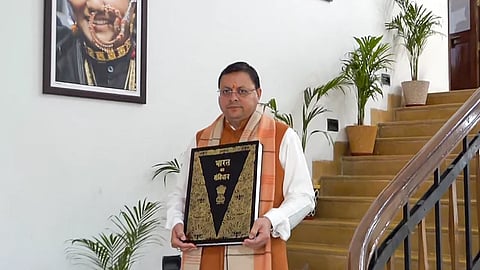
Two UCCs exist in India—in Goa, as a legacy of the Portuguese, and in Uttarakhand, the first state to adopt such a code. Neither of them is truly uniform. The Uttarakhand UCC entirely exempts tribal communities, while the Goa legislation carves out exceptions for some communities. The Uttarakhand UCC has also added to the sense of disquiet that minority and marginalised communities may feel about such legislation. In the name of protecting the rights of women, the state mandates that all live-in relationships be registered and treats failure to do so as a criminal act. Not only does this encroach on women’s right to privacy, it also subjects inter-caste and interfaith relationships—which already face brutal societal violence—to the scrutiny of state actors, rendering them even more unsafe. This returns us to Abu-Lughod’s question: is intervention in the name of women genuine, or a wolf in sheep’s clothing?
The notion of a UCC ought not to be as controversial as it seems. It may be contended that it is not unreasonable for a secular nation to have uniform laws governing marriage, inheritance, guardianship, and related matters. Yet, embedded in India’s history of reckoning with a UCC is a tension between plurality, equality and power. In a nation of such diverse traditions, entrenched patriarchy and deep communal fault lines, does a truly “secular” state exist that would enact a truly secular law? And do diverse marginalised communities have faith in the fairness of such a state? These are questions the judiciary and the legislature must contemplate.
