
The Union Cabinet’s decision to extend the Jal Jeevan Mission until 2028, with higher central funding, sends mixed signals. It shows the Centre is willing to go the extra mile to provide tap water to every household in the country. But it’s also a quiet admission that the work remains unfinished. Last week, the government raised the total outlay of the scheme to ₹8.69 lakh crore and increased central assistance by ₹1.5 lakh crore, from ₹2.08 lakh crore to ₹3.59 lakh crore. The Centre also shifted its focus from building infrastructure to improving service delivery through structural reforms. A common digital system for transparency and accountability has also been proposed, demonstrating the government’s willingness to address implementation issues.
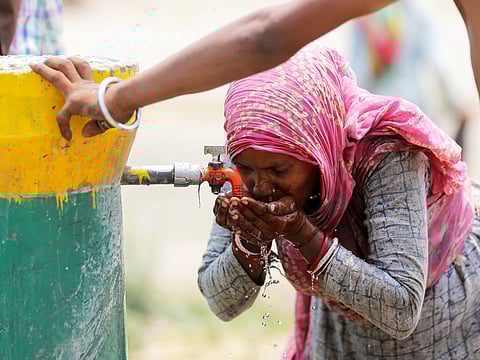
When the mission began in 2019, the government set an ambitious five-year target. Of India’s 19.35 crore rural households, only about 3.23 crore had tap-water connections then. Today, an additional 12.56 crore households have gained access, bringing coverage to over 81 percent of rural households. A major success is its impact on women, who usually carry the burden of fetching water from long distances. Easier access has improved their health and dignity. Studies also suggest the programme has helped cut under-five mortality by about 30 percent.
Yet the extension also highlights implementation gaps. Several states still remain below the national average in piped water coverage despite repeated pushes from the Centre. Rising project costs in some states and complaints about delays in the release of central funds have added to the problem. Tamil Nadu’s chief minister has even written to the prime minister seeking the release of ₹3,112 crore, saying delays have slowed projects. As governance and financing concerns persist, state governments must play a stronger role in taking the scheme to the last mile. Another challenge is water quality. Government data show that of about 64 lakh samples tested in 2025-26, nearly 1.61 lakh were contaminated, which is worrying.
As climate change, groundwater depletion, and erratic rainfall increase water stress in India, pipelines without secure long-term sources may become stranded assets. The mission’s extension should therefore be seen not just as a delayed deadline, but as a chance for serious course correction by the Centre and states alike to ensure a reliable, sustainably sourced water supply for all rural households in the years ahead.
