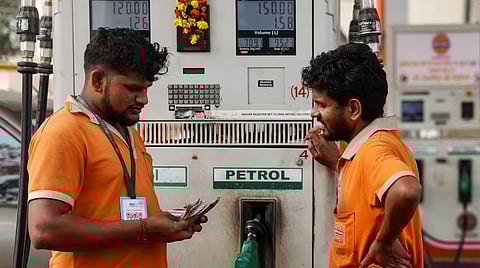

Amid rising global crude oil prices, the government on Friday reduced central excise duty on petrol and diesel for domestic consumption by ₹10 a litre. The move benefits oil marketing companies (OMCs) directly and consumers indirectly by cushioning them from higher prices. Before the Gulf war, global crude benchmarks were hovering around $70-75 a barrel, which translated into a domestic fuel cost of about ₹40 a litre. But it was sold above ₹100 after accounting for refining, freight, central excise and state levies, dealer commissions and OMC margins. Within this, central excise comprised the biggest component. But now, Indian OMCs are losing about ₹48 a litre after absorbing the ongoing rise in global crude prices. According to Petroleum and Natural Gas Minister Hardeep Singh Puri, central excise stood at about ₹24-30 a litre for petrol and diesel, and by forgoing a part of it, the government is taking a huge hit on tax revenue.
The government also imposed export duties on diesel and aviation turbine fuel, ensuring adequate domestic availability. Officials say the moves attempt to shield Indians from the global price and supply shocks amid the West Asia crisis. But critics insist that the actual reason behind the duty cuts was the assembly elections next month. Regardless, the move gives a breather to consumers and OMCs for now, though it is unclear if the duty cuts would prevail in May if the global prices stay higher for longer. If past experience is anything to by, fuel tax cuts are more about political parties’ self-fulfilling philosophy of politics today, economics tomorrow. For instance, between March and April 2022, the government slapped Indians with 14 fuel price hikes in 16 days after a 137-day freeze during state assembly elections.
Fuel prices are market-driven, yet politicians wield them cautiously with the wisdom that they can topple governments. Importantly, they are an important revenue source both for the Centre and the states, which means that if the global price rises continue, the Centre may not be able to hold the domestic prices down for long. Such a prospect will feed inflation, which affects both households and businesses. That said, it’s essential for the government to find the right balance between market discipline and the generosity of the welfare State.