
Diplomatic signalling is intensifying across West Asia, but the gap between such overtures and reality is widening. Mediation is being offered, channels are opening and multiple actors are rushing to claim space at the negotiating table, each hinting at de-escalation. But these signals are out of sync with recent events. The conflict is not pausing for diplomacy; it is expanding on its own terms, faster and wider, and increasingly seems beyond the reach of those trying to contain it.
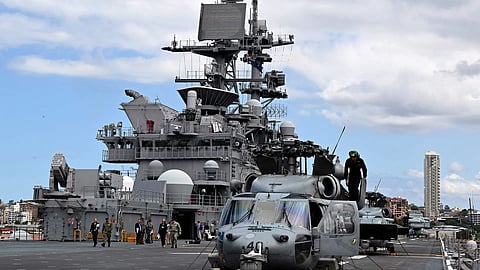
The arrival of USS Tripoli, carrying some 3,500 sailors and marines, shows the hard edge behind the messaging. The Americans have confirmed its deployment as Washington weighs its next move. Earlier reports point to a Marine Expeditionary Unit, designed for rapid, high-intensity operations from evacuations under fire to amphibious assaults, joining the war fray. This isn‘t posturing. It’s preparation.
Efforts to contain escalation are becoming increasingly precarious, with no clear diplomatic track on offer. Countries such as Egypt, Türkiye, Saudi Arabia and Pakistan are positioning themselves to open channels, but their roles remain largely facilitative conduits. The larger challenge is preventing an already expanding conflict from widening further, especially around critical chokepoints like the Strait of Hormuz, where disruption would carry even more far-reaching global economic and security consequences.
Managing rivalries, securing energy flows and stabilising a fragile region ultimately depends on more powerful stakeholders already party to the conflict and their willingness to opt for the path of diplomacy. As it is, the conflict itself is evolving. The Houthis’ entry marks a clear structural shift. Their missile launches toward Israel open another front and deepen the risk to global shipping. The Houthis have already shown they can disrupt Red Sea trade routes; their direct involvement raises the prospect of sustained pressure on maritime flows, energy supplies and insurance costs.
This is the key change. The war is no longer confi ned or linear. It is becoming multi-fronted, with the possibility that non-state actors can shape escalation as much as states. That makes it harder to predict, harder to contain and less responsive to diplomatic pacing. Even limited openings, such as Iran allowing some ships to transit the Strait of Hormuz, do little to alter the trajectory. The prospect of mediation signals might be rising. But for now, the battlefield is moving faster than the talks, setting the pace.
