
The Telangana Employees Accountability and Monitoring of Parental Support Bill, 2026 has been passed by the Telangana government, broadly in line with the Maintenance and Welfare of Parents and Senior Citizens Act, 2007. The key difference is that the new Bill expands the scope of the law to include private employees, in addition to government staff and elected representatives. While provisions such as a salary deduction of 15 percent or ₹10,000, whichever is lower, remain unchanged, Telangana has gone a step further by proposing an institutional mechanism to ensure effective enforcement.
The move reflects a pressing need, especially in a country that often invokes the ideal of matrudevo bhava, pitrudevo bhava, yet increasingly falls short in practice. According to the Longitudinal Ageing Study in India 2021, 5.2 percent of India’s elderly experienced abuse in 2020, with verbal abuse being the most common. In Telangana, the figure stands at 2.1 percent. Disturbingly, over half of the affected seniors reported neglect—rising to about 68 percent in Telangana.
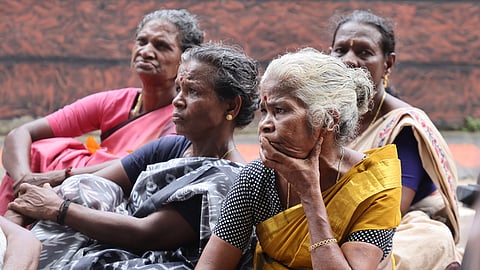
These figures, however, represent only reported cases. In reality, many more incidents go unreported due to family pressures and social stigma. As Chief Minister A Revanth Reddy observed, it is unfortunate that legislation must intervene in what should be a natural bond between parents and children. While his remarks may appear strong, his assertion that those who abuse or abandon their parents should face social disapproval underscores the gravity of the issue. India’s civilisational ethos has long placed parents and elders on a pedestal, equating them with the divine. Yet, in stark contrast, many elderly individuals today face emotional abuse, neglect and even dispossession of their own property by the very children they raised.
This raises a difficult question: can legislation alone address what is essentially a moral crisis? Existing laws, including the central Act and similar measures in states such as Assam, Tamil Nadu, Delhi and Himachal Pradesh, have not fully alleviated the problem. Even so, given the scale of the issue, enforcement remains necessary. At the same time, legal measures must be complemented by greater awareness—both of the law and values it seeks to uphold. In an era increasingly defi ned by nuclear families, and perhaps moving toward greater individualism, what is needed is not just regulation, but a broader cultural renewal.