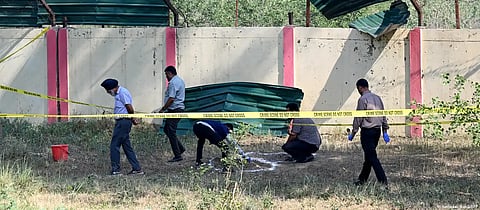

The recent explosions and attempted attacks in Punjab demand a calm and firm response instead of dramatic political reactions. The twin blasts near the BSF Frontier headquarters in Jalandhar and the Khasa military camp in Amritsar on May 5, along with earlier incidents in Patiala and Sirhind, show a worrying rise in coordinated acts of violence. Security offices, railway tracks, political centres, religious places and local leaders have all been targeted in recent months. Punjab Police have described these cases as joint operations involving gangsters, local criminals and extremist networks backed by Pakistan’s Inter-Services Intelligence.
Investigators believe some groups are using Khalistani propaganda to create fear and instability in the state. Recoveries of rocket-propelled grenades and crude homemade explosives also point to continuing efforts to disturb the peace. Although the police have arrested several suspects and dismantled some modules, the repeated incidents reveal clear gaps in intelligence coordination, policing and protection at vulnerable sites. In the Patiala case, the police made a major breakthrough, arresting four radicalised youth, reportedly connected to a pro-Khalistani terror module. They identified one of the four as the key conspirator, who they claimed was reportedly in touch with secessionist gangs based in Malaysia as well as arms suppliers from Pakistan.
Punjab has a long history of militancy and cross-border concerns that took decades to address. The state’s political history has been marked by the Punjabi Suba movement, militancy, Operation Blue Star, Centre-state tensions and the farmers’ protests. Issues related to identity, autonomy and federal rights remain deeply emotional for many, especially in rural Sikh communities. The political season swirling up before the 2027 Assembly election should not feed into old divisive narratives in this sensitive border state.
The main priority now should be fair investigations, stronger policing, better coordination between security agencies and quick legal action against those involved. These incidents must be handled as serious public safety issues, not turned into political battles for headlines. Political parties should stay away from communal remarks, extreme nationalist messaging and careless statements that give indirect support to criminal and extremist networks. Punjab has already seen the damage caused by violence, fear and mistrust. What the state needs is peace, coordinated security and responsible politics.
