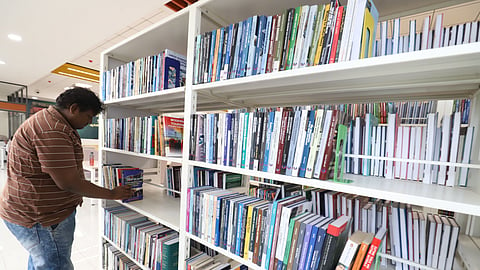

Public money has bought Tamil Nadu’s libraries books allegedly written using artificial intelligence tools, allowing fiction to settle on shelves meant for reference. Browsing the collection at Coimbatore’s Periyar Arivulagam library, writer Perumal Murugan encountered, on paper, a chief minister history seems to have elided, and a Nandi statue supposedly unearthed at Keezhadi. Naladiyar, the post-Sangam collection of verses, had acquired a new career as a poet. Discoveries of such fakery might have been amusing had the taxpayer not been billed for the volumes.
The scale of fraud is yet to become fully clear. This newspaper recently reported that about 2,200 books from publisher Agal Vilakku, whose office address led to a quiet residential suburb in Chennai, had been removed from Tenkasi’s District Central Library. An official in Tenkasi said librarians had hesitated to raise suspicions because certain higher authorities had been keen on the purchases and speedy payments for the books, most of which were priced above Rs 1,000. Government sources told this newspaper that district central libraries across the state held more than 50,000 books from such shady publishers.
Ordering an FIR, the Madras High Court observed that compliance with its 2024 directions, including adherence to the book procurement policy, would have prevented purchases from dubious sources. The November 2025 order governing book purchases for Periyar Arivulagam and other new libraries, for instance, clearly assigns responsibility for recommendations and approvals. Records should be readily available to establish who cleared these books.
Were experts pressured or their recommendations bypassed? The government must publish those records and ensure that no official responsible for fraudulent purchases escapes accountability. The procurement policy lists familiar tricks such as altered titles and inflated page counts. Its unfair practices clause makes no explicit provision for AI fabrications. Yet, that omission offers no excuse for buying bogus books.
AI can produce believable rubbish fast enough to overwhelm scrutiny. Elementary errors gave these books away. Future fabrications may offer fewer clues. Better prose and convincing references could make falsehoods harder to detect, even for attentive readers.
We cannot count on suppliers being careful. Rushed procurement leaves less room for scrutiny. Publishers must be able to substantiate authorship, and reviewers must have enough time to check them. Readers should not have to doubt every book a public library lends them.
