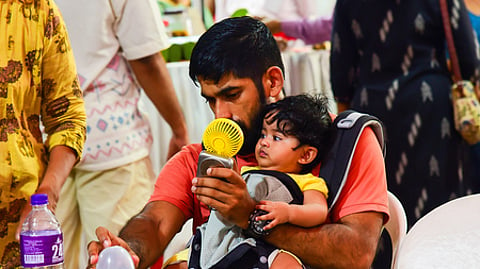

If the child is the father of the man, what becomes of the man who is father to the child? In today’s working environment, where both parents often have professional commitments and demanding schedules, fatherhood calls for active participation from the very beginning. While paternity leave is an entitlement for most central and some state government employees, fathers working in the private sector have no such luck.
Two recent developments that brought the issue into focus are Tamil Nadu Chief Minister C Joseph Vijay’s announcement of 15 days of leave for married male state government employees starting 15 days before the expected childbirth or within six months after. This came 10 days after the Gauhati High Court extended 14 days of paid paternity leave to eligible male officers. Under Rule 43-A of the Central Civil Services (Leave) Rules, 1972, male employees with fewer than two surviving children are entitled to 15 days of paid leave. States that already allow such leave include Sikkim, Kerala, Haryana and Uttar Pradesh.
Why, then, are private sector workers not covered by a similar rule? It’s time Corporate India considered introducing paid paternity leave voluntarily, even in the absence of a statutory requirement. A fortnight may seem too modest a time for a father to play a supportive role to the mother, since the father’s presence can offer practical and emotional support during a demanding time. Today, the professional cost a woman pays to raise a family is disproportionately higher. And a growing number of employers are acknowledging it’s not a gender-specific responsibility.
Employers must not view this provision as expensive or disruptive. A clearly-defined, paid leave paternity policy with reasonable eligibility conditions and flexibility is a practical starting point. Those who become parents through adoption or surrogacy also need similar support. It improves morale, loyalty and productivity when a company recognises employees have responsibilities beyond the office. If India’s corporate sector is often quick to adopt global management practices—from flexible working arrangements to wellness programmes—it should be equally willing to change its understanding of fatherhood. The government can lead by example, but the responsibility for changing workplace culture cannot rest with the public sector alone. All employers must recognise the father as an equal participant in the process of raising a child.
