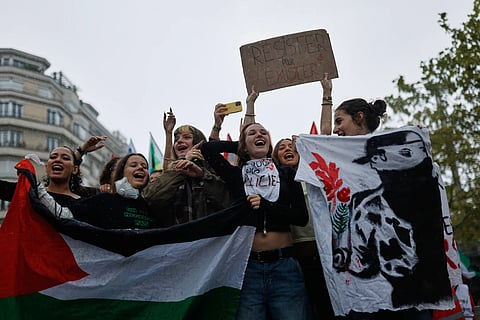

It’s almost as if Europe is reliving the summer of 1968 in the autumn of 2026. That widespread display of youth rebellion, in which the keg of social churn was lit by the kindling of ignored anxieties, spread from American campuses protesting the inhumanity of a distant war to European capitals hit by rising costs, changing mores and eroding workers’ rights. This time too, Paris is at the eye of the storm, with dilapidated and understaffed schools the focus of early agitations in September that served as a lightning rod for wider angst about post-school training and jobs; some large workers’ unions have joined in to protest rising living costs. People have also come out in large numbers in Brussels, Madrid, Lisbon, Rome, Athens and Tirana, complaining about housing crises, corruption and declining public services. A statue of Marianne, symbol of the French republic, was draped in a vest saying, ‘Police mutilate high-school children.’ Sounds familiar?
Though the triggers are various, the loudest common feature between so many European capitals today and Delhi is that people are feeling frustrated enough to take to the streets to demand change, rather than waiting for the next democratic turn. There is a perceptible gap between the issues worrying younger people and the ones politicians are addressing. In that gap is expanding Gen Z’s angst about underfunded education and dwindling prospects damaging the ladder of social mobility. French economist Thomas Piketty traced the current angst to a fifth cut in education spending per student since President Emmanuel Macron took over in 2017. Others pointed to a highly indebted government unable to invest in education and public infrastructure.
As in Bangladesh and Nepal not long ago, young Europeans are venting their anger by torching public structures. In Albania, simmering anger boiled over last weekend, with parts of the Supreme Court set ablaze. As in India, ruling politicians across Europe are talking more about law-and-order issues than discussing the underlying factors in earnest. Politicians should realise that, as in the late 1960s, when the earlier order was being challenged, there’s a broad sense today of older institutions failing younger citizens. The least democracies can do is acknowledge that a brave new world is at the gates. Business as usual would be so 2025.
