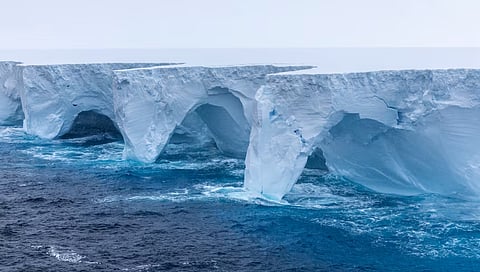

When Soviet scientists tried to get back to their Antarctic station Druzhnaya 1 in October 1986, they found it had drifted away on an iceberg. Thus began the slow journey of A-23a, the world’s largest iceberg that was once half the size of Bengaluru. After keeping the scientific community rapt for four decades, during which climate science grew into a formidable discipline, this massive table of snow recently melted away in the South Atlantic, releasing a trove of nutrients in sparkling-blue meltwater. It taught generations of glaciologists and marine biologists how melting icebergs act as transporter of materials, alter salinity and reconfigure ocean floors. Today it’s essential knowledge in a planet of rapidly-warming oceans. It’s as if a gentle giant finally rested after teaching the world the way of water.
