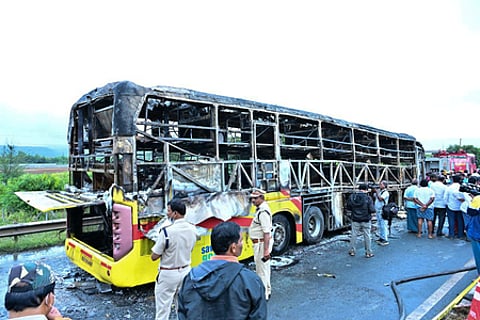

Every so often, a tragedy jolts us out of our collective slumber—but only for a while. The bus accident in Kurnool district of Andhra Pradesh on October 24, in which 19 people were charred to death, is a grim reminder of how little changes despite the recurring horror. The Bengaluru-bound bus from Hyderabad, owned by a private operator, hit a bike and caught fire. Within minutes, the bus turned into a fireball—yet another statistic in India’s endless catalogue of preventable road disasters.
In the last decade, over a hundred people have died in similar bus accidents across the country—from Maharashtra to Tamil Nadu, from Rajasthan to Andhra. Days before the Kurnool tragedy, a similar inferno in Rajasthan claimed 20 lives. Most of these accidents involve private buses, exposing glaring regulatory lapses and a deep-rooted nexus between transport authorities and operators. In Kurnool’s case, the bus had all its ‘valid documents’ on paper—registered in Daman and Diu, with a fitness certificate and a tourist permit from Odisha—but that, in itself, tells a story. The maze of registrations across distant states, driven by lower fees and laxer scrutiny, allows operators to bypass local enforcement.
Equally worrying is the reckless tinkering with vehicles. Automotive industry standards prescribe safety measures such as multiple exits and structural endurance tests, but these are routinely ignored. A seater bus becomes a sleeper overnight. The Kurnool vehicle, too—reportedly modified without approval—turned into a death trap. The authorities’ response has followed the familiar script: arrest the driver, seize the vehicle, order a probe, promise strict action. The real question remains unaddressed: who allowed such vehicles on the road in the first place?
Telangana and Andhra Pradesh have now proposed talks with Karnataka to plug cross-border loopholes. That may help, but what India urgently needs is a unified, nationwide road transport code—a level playing field in registration fees, standardised certification for body builders, rigorous vehicle fitness tests, and genuine oversight of driver professionalism, including rest and work conditions. Speed governors, surveillance, and digital fitness tagging must become the norm, not the exception.
Unless the chain of responsibility extends beyond the driver’s seat to the desks of negligent officials and profiteering operators, nothing will change. The Kurnool tragedy is not an accident; it is the outcome of institutional indifference.