
Can epilepsy be a deterrent to a successful sports performance?” the friend asked.
“While conqueror Julius Caesar is believed to have suffered from epilepsy, Lenin of Russia actually died of status epilepticus. He had seizures nearly for 50 minutes,” dad said.
“What is status epilepticus?” the friend asked.
“Florence Griffith Joyner, the world record holder of the 100m is supposed to have died of asphyxia during an epileptic seizure in sleep, in 1998. During autopsy they found a cavernous hemangioma, which was the cause of her epilepsy,” dad continued.
“The hemangioma is a benign, tumour-like malformation of the blood vessels. Status epilepticus is the name of the epileptic seizure that persists for more than 30 minutes without a break and can be life-threatening,” mom explained.
“I’m still curious to know whether exercise, especially, an aerobic exercise, is a contraindication for an epileptic?” the friend asked.
“There are only rare incidents of aerobic exercise causing any seizures. The general advice is to ensure that the benefits of aerobics is extended to the patient and not let the thought of having a seizure, that may happen or may never happen, hinder the process. The frequency of seizures is considerably reduced if aerobic exercises are done regularly,” dad said.
“It is a common belief that when a person’s respiratory rate is increased, it may cause a seizure. It has also been proved that exercise-induced hyperventilation does not cause any attack of epilepsy only hyperventilation during rest owing to other causes may induce an attack,” mom explained.
“The convulsions seen after repeated head injuries in contact sports — concussive convulsions — are not seizures, except the ones seen after severe head injury, which is not the
case in sport like boxing, where repeated injuries do not cause any
convulsions because the impact received are lower to the one received in road traffic accidents or F1 racing,” dad added.
“The evidence for increased risk of participation and performance clearly outweighs the potential of benefits. Then it is essential to predict the risks and benefits on an individual basis taking all other factors into consideration,” mom said.
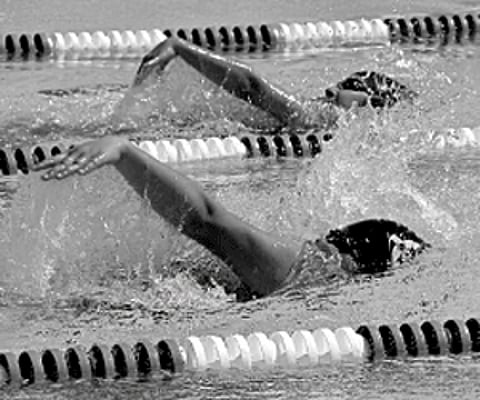
“What about the risk of swimming?” the friend asked.
“The traditional conservative
approach to absolutely ban swimming is not required. Direct supervision in a shallow pool is safe and
need not be a restraint for participation. The question of a rower developing a seizure and falling into the water can be managed by wearing a floater, which may prevent a catastrophic event,”
mom answered.
“Scuba diving is a totally different thing — it is contraindicated for an epileptic even though they may be on medications that fairly control the seizure. The anti-epileptic medications are capable of ‘nitrogen narcosis’ that may put them under a considerable risk,” dad said.
“Nitrogen narcosis is altered consciousness during scuba diving. Equestrian sports involves horse riding where the incidence of a fall from the horse is high, hence it is not recommended. Gymnastics that involve swinging on the bars may be more dangerous for an epileptic whereas the floor exercises including artistic gymnastics may be safer,” mom said.
“What about track and field events and games?” the friend asked.
“Many athletes in world class competitions have been known epileptics and have performed well in all the contact sports. There is no strict prohibition for contact sports as there is no evidence that even mild blows to the head like during boxing do not cause any serious risk for a seizure. In fact, the participation in sports games have reduced the frequency of seizures,” mom said.
“Choices of participation must be made on an individual basis understanding the risks involved and be realistic than restrictive. Decisions are made with the full cooperation of the individual involved. If safety measures could be appropriately adopted to ensure participant’s safety, school children should be encouraged to participate in various sports for their total development of the body, mind and spirit,” dad concluded.
— sparrc@gmail.com