
Disturbed by dreams that take him back in time, Rahul wakes up with a sense of dread and loss in his home in San Francisco. His partner, Andrew, is in turn troubled by Rahul’s distant demeanour, and fails to understand what haunts him, until an email from home reveals that Rahul has to meet a prospective bride picked out by his family. Wanting to keep his gay life a secret, he has been meeting girls sent by his parents and rejecting them on various grounds. But Andrew, who now knows this, will not put up with being a second-class citizen in Rahul’s life.
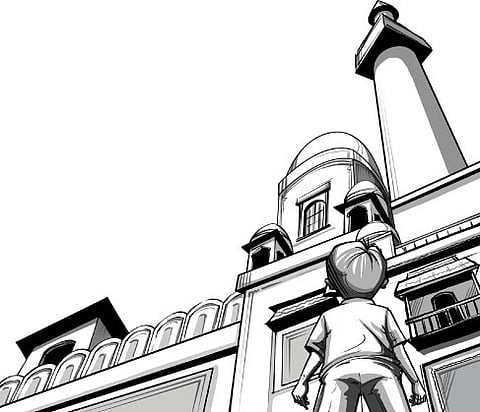
In an effort to help Andrew realise why he is the way he is, Rahul begins the story of his childhood and his roots. This is where the readers are introduced to ‘the palace’, which along with its expansive gardens and orchards forms the central character. The Mint House, originally built for a Nizam, was not occupied due to superstitions. Taken over by the government, it then housed Rahul, his mother, his father and his sister, Rani, and the Colonel Uncle. The author’s simple narrative brings alive the lush greens, the birds, bats and monkeys that co-inhabited the palace. It’s no wonder soft-hearted Rahul is attached to it.
The prejudices and injustices in post-partition India are very evident. Brought up with traditional Bengali values, Rahul was expected to get straight As, play football and obey the caste system and not mingle with pariahs — Muslims (in the light of the communal riots ) and “homos”. But he is also an effeminate boy who enjoys the company of his sister and friends, has a love for Rajesh Khanna that he can’t explain and begins to feel strongly for the brother of his best friend.
He also faces flak from boys for the way he is and suffers the mental agony of imagining the implications of his secret desires. The book also takes us through the lives of Mallika, Rahul’s friend, who loved a Muslim and was forced to marry a Bengali, only to be abused and finally runs away to start a life of her own, and his best friend Ranjan’s acts of jealousy.
Just like the palace, Durga ma also plays an important role in the novel. Replete with Indian clichés like the 70’s mentality, hairdos, parental pressure to become an engineer or doctor, placing religion and family honour above all else, it could be a chapter out of our lives. Rahul’s childhood is filled with innocent ignorance, secrets of his sexual orientation, Mallika’s love affair and his visits to
Colonel Uncle, who also seems to be a homosexual, but urges Rahul to develop his own identity.
How he deals with the demons of his past and comes out of the closet, with the flashback as a form of cleansing makes up the rest of the story.
Hard to put down once you start, you wind up being a silent observer to the lives of these food-and-ritual-loving Bengalis. It also is a testimony to those few who choose to break the rules to follow their heart.
— preethi@newindianexpress.com