
The 2026 assembly elections delivered a sweeping political churn across India, marked by decisive victories, fractured mandates, and the rise of new political forces. The Bharatiya Janata Party (BJP) emerged as the dominant force in West Bengal and retained Assam for a third straight term, while Tamil Nadu witnessed a dramatic debut by actor-politician Vijay’s Tamilaga Vettri Kazhagam (TVK), which broke into the political mainstream as the single largest party in a hung assembly.
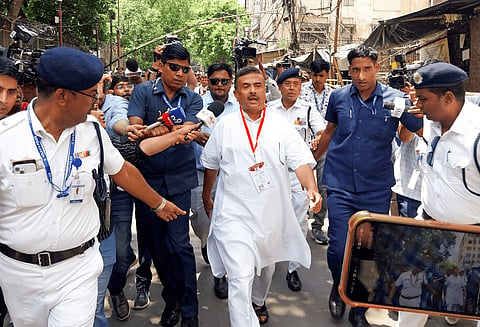
In West Bengal, Election Commission trends showed the BJP crossing the 200-mark with 206 combined wins and leads in the 294-seat House, reducing the ruling Trinamool Congress (TMC) to 81. The result ended Mamata Banerjee’s bid for another term, with the chief minister also losing in Bhabanipur to BJP’s Suvendu Adhikari.
Prime Minister Narendra Modi hailed the outcome as a mandate for “politics of performance,” crediting voters for endorsing good governance and thanking party workers across states. He also invoked Syama Prasad Mookerjee and called the verdict a historic “poriborton” moment for Bengal.
Banerjee rejected the results, alleging that more than 100 seats were “looted” and accusing the Election Commission of bias. She claimed irregularities in counting and machine functioning in several constituencies. Congress leader Rahul Gandhi echoed the charge, alleging that both West Bengal and Assam saw “stolen mandates,” and linked the outcome to earlier contested elections.
In Assam, Chief Minister Himanta Biswa Sarma led the BJP to a third consecutive victory with a commanding 102 seats in the 126-member Assembly. The BJP won 82 of 90 seats it contested, while allies Bodoland People’s Front (BPF) and Asom Gana Parishad (AGP) secured 10 seats each, cementing NDA dominance. The Congress managed just 19 seats despite contesting 99.
Sarma retained Jalukbari for a sixth straight term, defeating Congress candidate Bidisha Neog by 89,434 votes. In a major setback for the Congress, state president Gaurav Gogoi lost Jorhat to BJP’s Hitendranath Goswami by 23,181 votes. Senior BJP ministers and leaders, including Ajanta Neog, Ranoj Pegu, Pijush Hazarika, Ashok Singhal, Kaushik Rai, Prashanta Phukan, Krishnendu Paul and Bimal Borah, also secured wins, reinforcing the party’s statewide hold.
Sarma’s victory further consolidated his long political journey—from his early days in the Assam Agitation, mentorship under Hiteswar Saikia and Tarun Gogoi, his exit from Congress in 2015, and his role in expanding BJP influence across the Northeast as convenor of the North East Democratic Alliance (NEDA).
In Tamil Nadu, the election produced a political earthquake as Vijay’s TVK emerged as the single largest party with 108 seats, though falling short of the 118 needed for a majority in the 234-member House, resulting in a hung assembly. The DMK secured 59 seats and the AIADMK 47, marking the end of the state’s long-standing bipolar structure.
TVK’s debut was powered by a 34.90% vote share and strong performances across urban and semi-urban belts. Vijay won from both Perambur and Tiruchirappalli East, while his party posted major victories in constituencies such as Shozhinganallur (96,370-vote margin) and Madhavaram (94,985). The party also saw extremely narrow wins in places like Kumbakonam (679 votes) and Cumbum (751 votes), reflecting a tightly balanced contest alongside sweeping victories.
A defining moment of the election came in Kolathur, where DMK chief and Chief Minister M K Stalin lost by 8,795 votes to TVK’s V S Babu, a former DMK MLA who joined TVK in February 2026. Stalin, a seven-term legislator and long-time Kolathur representative, suffered his first electoral defeat in 35 years, marking a symbolic blow to the DMK.
Several ministers, including Geetha Jeevan and Ma Subramanian, were also defeated, while Deputy Chief Minister Udhayanidhi Stalin initially trailed before securing a win in Chepauk-Thiruvallikeni.
TVK’s performance included deep inroads into AIADMK strongholds in western Tamil Nadu and a significant vote share among younger and urban voters. The debut also drew political reactions across the spectrum, with BJP leader K Annamalai calling it a “generational shift” and Congress leader Rahul Gandhi describing it as the “rising voice of youth.”
In Kerala, the Left Democratic Front (LDF) suffered a decisive defeat, losing its long-held dominance, while the Congress managed only a single seat, marking one of its weakest performances in the state.
The UDF secured a sweeping victory in the 140-member Assembly, winning 102 seats, while the LDF was reduced to 35 seats. The result ends the Left’s decade-long rule under Chief Minister Pinarayi Vijayan and represents the first time in nearly five decades that the Left is not in power in any Indian state.
Congress emerged as the dominant force within the alliance, with a vote share of 28.79 per cent, while the Communist Party of India (Marxist) secured 21.77 per cent. The Indian Union Muslim League (IUML), a key UDF ally, recorded an 11.01 per cent vote share.
In Puducherry, the AINRC-led NDA retained power with 18 of 30 seats. Within the alliance, AINRC won 12 seats, BJP four, and AIADMK and LJK one each. DMK and Congress secured six seats each, TVK won two, Neyam Makkal Kazhagam one, and Independents three. Chief Minister N Rangasamy won both Thattanchavady and Mangalam, defeating DMK and Neyam Makkal Kazhagam candidates. Key ministers including A Namassivayam, A John Kumar and PNR Thirumurugan also retained their seats, while opposition heavyweights including R Siva and V Vaithilingam lost.
The highest victory margin in Puducherry was 10,205 votes (LJK’s Jose Charles Martin in Kamaraj Nagar), while the lowest was 287 votes in Raj Bhavan (DMK’s Vignesh Kannan). Prime Minister Narendra Modi congratulated Rangasamy, calling it a continuation of good governance.
Across states, Elections 2026 redrew India’s political balance: the BJP strengthened its national footprint with major wins in Bengal and Assam, TVK disrupted Tamil Nadu’s entrenched political order in a historic debut, Puducherry reaffirmed NDA continuity, and several opposition parties faced sharp reversals. The verdict marked a hung yet transformative election cycle, defined by regime change, new political entrants, and shifting voter alignments across regions.
(With inputs from PTI)
