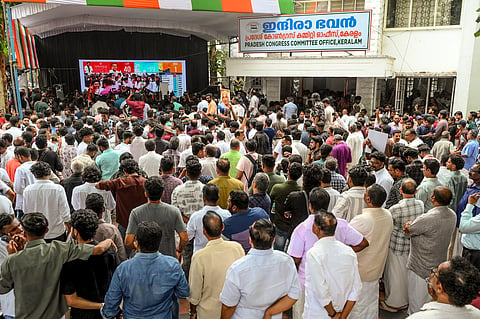

The Assembly election results delivered a mixed outcome for the Congress, which returned to power in Kerala but failed to dislodge the BJP in Assam.
After a series of electoral setbacks following the 2024 Lok Sabha polls, the Congress managed to wrest Kerala from the Left Democratic Front (LDF), ending a decade of Left rule. The defeat also marked the end of Left governance in any Indian state, a point highlighted by Prime Minister Narendra Modi in his remarks at the BJP headquarters.
With the Kerala victory, the Congress is now in power in three southern states, Karnataka, Telangana and Kerala, along with Himachal Pradesh in the north, where Assembly elections are due next year. The win also comes as a face-saver after losses in Maharashtra, Delhi, Haryana and Bihar.
However, the party could not replicate this success in Assam, where it faced a strong pro-incumbency wave in favour of the BJP, which secured a two-thirds majority. The Congress polled around 29.5 per cent votes in Assam, compared to 28.8 per cent in Kerala. In West Bengal, it managed just 3.13 per cent vote share, while in Tamil Nadu it secured 3.38 per cent. It is also likely to end up with fewer seats in Assam than in the previous election.
Nationally, the weakening of regional players such as the Trinamool Congress, DMK and the Left could provide the Congress more space within the INDIA alliance, where Mamata Banerjee had recently been asserting herself.
Congress president Mallikarjun Kharge described the results as a “mixed bag,” saying the party remained committed to its ideological path. “The results have been a mixed bag. However, we must remember that ours is an ideological battle. Such a path demands patience, perseverance, and unwavering resolve,” he said, adding that the party would continue to serve the people and uphold democratic values.
Senior leader Jairam Ramesh said the party would conduct a comprehensive review of the results, noting that outcomes outside Kerala fell short of expectations. “However, we are neither disheartened nor dejected,” he said, describing the party’s efforts as part of a long ideological struggle.
Shashi Tharoor termed the Kerala victory significant but acknowledged the Assam defeat as disappointing. He also suggested that any strong anti-BJP alliance would need to revolve around the Congress, pointing to the defeats of regional parties such as the TMC and DMK in West Bengal and Tamil Nadu, where both incumbent chief ministers lost their seats.
While the Kerala result offers a boost, Congress leaders say the party must strengthen its organisational base and address internal divisions to effectively challenge the BJP in upcoming elections. The party’s past performance shows it struggles in direct contests with the BJP, indicating a need for better strategy.
Leaders also believe the Congress can draw lessons from Kerala for future battles, including Punjab, where it is the principal challenger to the ruling Aam Aadmi Party. In Kerala, the party presented a relatively united front, managed internal differences, including with Tharoor—and allowed the state unit to lead the campaign instead of relying on Lok Sabha MPs.
The next major test for the Congress will come in early 2027 with the Punjab Assembly elections, where factionalism has previously posed challenges. The party will also face tough contests in Uttarakhand against an entrenched BJP, while in Uttar Pradesh it continues to fight for political relevance.
(With inputs from PTI)
