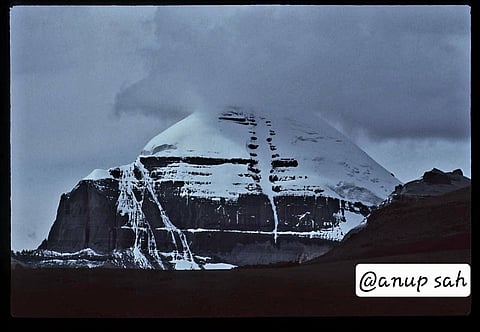

Few spiritual journeys command the reverence associated with the Kailash Mansarovar Yatra. Centred on Mount Kailash and Lake Mansarovar in Tibet, the pilgrimage is regarded by millions as a rare confluence of faith, endurance and devotion. Sacred to Hinduism, Buddhism, Jainism and the indigenous Bon faith, it draws believers from across traditions to a landscape many consider among the world’s holiest.
Beyond its spiritual significance, the yatra is also one of the world’s most logistically complex pilgrimages. Located in China’s Tibet Autonomous Region, it requires extensive diplomatic coordination between New Delhi and Beijing, meticulous planning and strict medical screening because of the region’s extreme altitude, inhospitable terrain and strategic sensitivity.
After remaining suspended from 2020 to 2024 because of the Covid-19 pandemic and the subsequent strain in India-China relations, the government-organised yatra resumed in 2025. This year’s pilgrimage was flagged off on July 5.
Latest update (July 15): The yatra has encountered its first weather-related disruption this season. The fourth batch of pilgrims has been temporarily halted at Dharchula in Uttarakhand after heavy rain triggered boulders and debris on the road to higher camps. Authorities have described the stoppage as a precautionary measure, with Border Roads Organisation teams clearing the affected stretch. The pilgrimage itself has not been suspended and will resume once the route is declared safe.

What are Mount Kailash and Lake Mansarovar?
Mount Kailash is a pyramid-shaped peak in the Trans-Himalayan Kailash Range, rising about 6,638 metres above sea level. Nearby Lake Mansarovar, at an altitude of around 4,590 metres, is one of the world’s highest freshwater lakes. Pilgrims traditionally undertake the 52-km Kailash Parikrama, or Kora, over three days. Although deeply revered, Mount Kailash is not open to mountaineering and its summit remains unclimbed out of respect for its sacred status.
Why is Kailash Mansarovar considered sacred?
Hindus regard Mount Kailash as the abode of Lord Shiva and Goddess Parvati, while Lake Mansarovar is believed to have originated in the mind of Lord Brahma. Buddhists associate Kailash with Mount Meru and the deity Demchok. Jains identify it with Ashtapada, where the first Tirthankara, Rishabhadeva, attained liberation. Followers of the Bon faith also revere the mountain as a sacred spiritual centre.
Where is the pilgrimage located, and how far is it from Delhi?
Mount Kailash and Lake Mansarovar are located in Ngari Prefecture of the Tibet Autonomous Region, near India’s Uttarakhand border and the Nepal-China frontier. Via the government-operated Lipulekh route, the journey from Delhi to the Kailash region covers roughly 900-1,000 km by road, besides the 52-km parikrama. The alternative Nathu La route through Sikkim is longer by road but involves comparatively less trekking. Private operators also offer access through Nepal, subject to Chinese visas and permits.
Which routes does the government operate?
The Ministry of External Affairs conducts the yatra through two routes: Lipulekh Pass in Uttarakhand and Nathu La in Sikkim. According to Uttarakhand Tourism Secretary Dhiraj Singh Garbyal, improved infrastructure has reduced the trekking component on the Lipulekh route, although it remains physically demanding. The Nathu La route relies largely on motorable roads and is generally considered less strenuous, making it more suitable for older pilgrims.
How long does the yatra take?
The journey typically lasts about three weeks, including acclimatisation, medical examinations, border formalities and travel in Tibet, although schedules may vary depending on weather and administrative requirements.
What makes the journey so challenging?
The yatra traverses one of the Himalayas’ most demanding landscapes, with pilgrims ascending rapidly to altitudes above 4,500 metres and crossing the 5,630-metre Dolma La during the parikrama. Low oxygen levels can trigger acute mountain sickness and, in severe cases, life-threatening pulmonary or cerebral oedema. Freezing temperatures, snowfall, landslides, limited communications, basic accommodation and restricted medical facilities add to the challenge. Applicants must also clear stringent medical examinations before receiving final approval.
Why was the yatra suspended for five years?
The pilgrimage remained suspended from 2020 to 2024, initially because of the Covid-19 pandemic and international travel restrictions. Its revival was subsequently delayed by the deterioration in India-China relations following the 2020 eastern Ladakh military standoff. It resumed in 2025 after diplomatic engagement helped restore people-to-people exchanges, including the pilgrimage.
What role do the Centre and Uttarakhand government play?
The Ministry of External Affairs manages applications, pilgrim selection, visas, permits and diplomatic coordination, working with the ministries of home affairs, defence and health, the Indo-Tibetan Border Police, and state governments. In Uttarakhand, the state government, district administrations and Kumaon Mandal Vikas Nigam oversee accommodation, food, transport, logistics and emergency support along the Lipulekh route, while medical teams supervise acclimatisation and health monitoring.
How many pilgrims undertake the yatra annually?
The number varies depending on route capacity, weather, medical fitness and permits issued by the Chinese authorities. Before the suspension, the government programme generally accommodated around 800 to 1,000 pilgrims annually. For the 2025 resumption, the announced capacity was 750 pilgrims—250 through the Lipulekh route in five batches and 500 through the Nathu La route in 10 batches. The final number completing the pilgrimage may differ.
How is this year’s yatra progressing?
The yatra began on July 5 with the flagging off of the first batch from Tanakpur in Uttarakhand. According to Atul Bhandari, Deputy Director of Uttarakhand Tourism in Pithoragarh and the yatra’s nodal officer, 10 batches are scheduled between July 5 and August 10, with around 40 to 50 pilgrims in each group.
The first batch comprised 49 pilgrims from 13 states, including 34 men and 15 women. Led by Dr Arun Kumar of Tamil Nadu, it included Rajasthan’s 68-year-old Purushottam Khandelwal as the oldest pilgrim and Gujarat’s 21-year-old Harikrishna as the youngest.
The pilgrimage has since encountered its first weather-related interruption. The fourth batch has been temporarily halted at Dharchula after heavy rain triggered boulders and debris on the road to higher camps. Officials have described the stoppage as a precautionary measure while Border Roads Organisation teams clear the affected stretch. The yatra itself has not been suspended and is expected to resume once the route is declared safe.
How much does the pilgrimage cost?
The cost varies depending on the route and services included. Pilgrims should budget around ₹1.8 lakh to ₹2.2 lakh for the Lipulekh route and ₹2.5 lakh to ₹3 lakh for the Nathu La route. These estimates generally cover travel, accommodation, meals, logistics and expenses in the Tibetan sector. Medical tests, specialised clothing and equipment, insurance, and travel to and from Delhi are usually additional. Private packages through Nepal range from around ₹2 lakh to over ₹4 lakh.
Why does the yatra matter beyond religion?
Beyond its religious significance, the yatra has strategic and economic importance. The Lipulekh route passes through a sensitive tri-junction involving India, China and Nepal. Infrastructure developed to support the pilgrimage has strengthened border connectivity while benefiting local communities. The annual yatra also generates seasonal employment for drivers, porters, guides, hotels, homestays and suppliers in Uttarakhand and Sikkim.