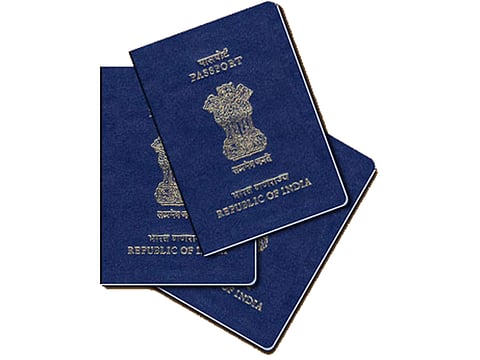

The recent clarification by the Ministry of External Affairs (MEA) that an Indian passport is "a travel document and not proof of citizenship" has sparked a fresh political and legal debate over what constitutes evidence of Indian citizenship.
The controversy began during the observance of the 14th Passport Seva Divas on June 24, when a senior MEA official said that while passports are issued only after extensive verification, their primary legal purpose is to facilitate international travel and establish the holder's nationality abroad, and they should not be treated as standalone proof of citizenship. The ministry maintained that this has always been the legal position under the Passports Act and existing judicial interpretations.
Widespread reactions and criticism
The remarks triggered widespread reactions on social media and drew criticism from opposition leaders, who argued that the government's clarification has created confusion among millions of passport holders. Congress MP Shashi Tharoor described the position as an "absurd legal paradox" and called for legislative changes to recognise passports as conclusive proof of citizenship.
Opposition parties and several public figures, including TMC founder and former chief minister of West Bengal Mamata Banerjee and Shiv Sena (UBT) leaders, also questioned the government's stand, asking what document an ordinary citizen could rely on if even a passport was not considered proof of citizenship.
Legal position
Legal experts, however, point out that the government's position is not new. Under Indian law, citizenship is governed by the Citizenship Act, 1955, while passports are regulated under the Passports Act, 1967. A passport is issued after verification of documents and identity but is legally intended to enable international travel rather than serve as a definitive citizenship certificate. Courts, including the Bombay High Court, have in earlier judgments observed that possession of a passport by itself does not conclusively establish Indian citizenship.
Universal citizenship certificate
The debate has also highlighted a larger policy issue—that India does not issue a universal citizenship certificate to all citizens by birth. While citizenship certificates are granted in cases of registration or naturalisation, people born as Indian citizens generally rely on a combination of documents such as birth certificates, parental records and other official documents depending on the context. This has revived concerns about the absence of a single universally accepted document proving Indian citizenship.
India's passport ecosystem
The country's passport ecosystem has witnessed remarkable growth over the past decade, reflecting the country's rising international mobility, expanding middle class, growing overseas workforce and increasing appetite for global travel. Annual passport issuance has not only recovered strongly from the disruption caused by the Covid-19 pandemic but has also reached record levels, underscoring the growing demand for international travel documents across the country.
According to government data, India issued a record 1.37 crore passports in 2023, the highest ever in a single year. The figure marks a significant jump from around 1.17 crore passports issued in 2022 and exceeds the pre-pandemic level of nearly 1.22 crore recorded in 2019. Passport issuance had fallen sharply during the pandemic, dropping to about 60 lakh in 2020 and 73 lakh in 2021 as international travel restrictions and lockdowns reduced demand.

Sustained rise in passport applications
The rebound since then has been swift. The Ministry of External Affairs has expanded passport services through a nationwide network of Passport Seva Kendras and Post Office Passport Seva Kendras, while greater digitisation has reduced processing time and improved accessibility. The increasing number of Indians travelling abroad for employment, higher education, tourism and business has also contributed to the sustained rise in passport applications.
Despite the rapid growth, passport ownership in India remains relatively low when compared with many developed and emerging economies. Estimates suggest that fewer than one in every ten Indians currently holds a valid passport, highlighting the enormous untapped potential for future growth as incomes rise and international mobility becomes more common.
State-wise data reveal significant regional variations in passport issuance. Kerala continued to lead the country in 2023 with around 15.47 lakh passports issued, narrowly ahead of Maharashtra, which issued about 15.10 lakh passports. Uttar Pradesh ranked third with approximately 13.68 lakh passports, followed by Punjab with 11.94 lakh and Tamil Nadu with 11.47 lakh.
Educational migration and business travel
These five states alone accounted for nearly half of all passports issued across India during the year. Their dominance reflects distinct economic and demographic factors. Kerala has historically recorded the highest passport demand because of its large expatriate population working in the Gulf region and other overseas destinations. Maharashtra's position is driven by its large urban population, international business hubs such as Mumbai and Pune, and a growing number of professionals and students travelling abroad. Uttar Pradesh's rapid climb reflects its large population, increasing overseas migration and expanding aspirations among younger residents. Punjab continues to register strong passport demand due to long-standing migration trends to countries such as Canada, the United Kingdom, Australia and New Zealand. Tamil Nadu's high ranking is supported by overseas employment, educational migration and business travel.
Other major contributors include Gujarat, Karnataka, Delhi, West Bengal and Andhra Pradesh, all of which issue several lakh passports annually. Gujarat's strong entrepreneurial base and overseas business connections contribute to robust passport demand, while Karnataka benefits from its large technology workforce and international business travel. Delhi, despite its smaller population, records high passport issuance because of its concentration of professionals, government officials and business executives.
The ranking changes slightly when viewed in terms of the cumulative number of passport holders rather than annual issuance. Maharashtra is estimated to have the largest number of passport holders, followed closely by Kerala. Uttar Pradesh ranks third, while Tamil Nadu and Punjab complete the top five. Gujarat, Karnataka, West Bengal, Delhi and Andhra Pradesh also figure prominently among states with the highest number of passport holders.
However, absolute numbers tell only part of the story. Passport penetration, measured as the proportion of a state's population holding passports, presents a different picture. Kerala remains the undisputed leader, with roughly one-third of its population estimated to possess passports. This is among the highest passport penetration rates in Asia and reflects decades of overseas migration and strong international family networks.
Punjab also records one of the highest passport penetration rates in the country, supported by sustained migration to North America, Europe and Australia. Goa, despite its relatively small population, has high passport ownership because of international tourism, overseas employment and its long history of global connectivity. Several northeastern states similarly report comparatively high passport penetration owing to educational opportunities and overseas migration.
In contrast, large states such as Bihar, Madhya Pradesh, Rajasthan and Chhattisgarh continue to have relatively low passport penetration despite their sizeable populations. This suggests considerable scope for future expansion as incomes improve, air connectivity expands and international travel becomes more affordable.
Broader changes in India's economy and society
The overall growth in passport issuance mirrors broader changes in India's economy and society. Rising disposable incomes, cheaper international air travel, easier visa processes for several destinations, expanding global employment opportunities and the growing popularity of overseas education have all contributed to higher demand. The increasing number of Indians taking leisure holidays abroad has also emerged as an important driver in recent years.
The government's continued efforts to modernise passport services have played a significant role in supporting this growth. The expansion of Passport Seva Kendras and Post Office Passport Seva Kendras has improved access to passport services even in smaller towns and semi-urban areas, reducing travel time and making the application process more convenient for first-time applicants.
Looking ahead, India's passport numbers are expected to continue rising steadily. With a population of more than 1.4 billion and passport ownership still below 10 percent, the country represents one of the world's largest untapped markets for international travel. As economic growth continues, outbound tourism expands and overseas employment and education opportunities increase, annual passport issuance is likely to set fresh records in the coming years, further strengthening India's position as one of the fastest-growing sources of global travellers.
The question of citizenship documentation
More importantly, the controversy comes at a time when India is witnessing a record surge in passport issuance. As noted above, the country issued nearly 14 million passports in 2023, the highest ever in a single year, even as the government continues to expand passport services through Passport Seva Kendras and the rollout of e-passports. Ironically, just as more Indians than ever are obtaining passports, the debate has shifted from access to the document itself to a more fundamental question: what legally constitutes proof of Indian citizenship?