
Most people assume dandruff is dandruff. You see flakes, you reach for an anti-dandruff shampoo, and you expect the problem to go away. But here's something that often gets overlooked, not all dandruff is the same. In fact, there are two distinct types of dandruff, and they form in very different ways. Understanding the difference is what makes the difference between a shampoo that solves the problem at surface level and the one that actually penetrates deep into the root.
Before getting into the types of dandruff, it helps to understand what causes dandruff in the first place, because it isn't simply a hygiene issue, and it isn't caused by a dry scalp alone.
At the root of dandruff is a naturally occurring yeast called Malassezia globosa. It lives on everyone's scalp and is usually harmless. The problem starts when conditions on the scalp- excess oil production, sweat, heat, pollution, or infrequent washing, allow it to multiply more actively than usual. As it feeds on the scalp's natural oils, it produces by-products that irritate the scalp, trigger inflammation, and speed up the shedding of skin cells. Those shed cells are what appear as visible flakes.
This is why dandruff keeps coming back for so many people. Shampoos that only remove dandruff from the surface don't address the underlying microbial imbalance that keeps producing them. Once the shampoo is washed out, the cycle starts again.
Dandruff can be broadly categorised into two types: dry flaky dandruff and oily sticky dandruff. Both are signs of the same underlying imbalance, but where they form, and how they need to be treated, is quite different.
Dry flaky dandruff is what most people picture when they think of dandruff. These form on the outer layer of the scalp when skin cells shed unevenly due to irritation. They tend to be visible on the hair and clothing and are often the first thing people notice. Depending on the scalp's oil levels, they may appear as fine, powdery white flakes that fall freely- common in drier scalp types.
Oily sticky dandruff, on the other hand, is slightly yellowish, sticky flakes that are clumped together and look slightly sticky. These flakes often stick to the scalp or nails rather than falling freely on clothing, which is more typical when excess oil is involved.
The key difference between oily and dry dandruff lies in scalp oil levels and flake texture. Oily sticky dandruff requires controlling excess oil along with antifungal action, and dry flaky dandruff requires maintaining scalp balance without excessive stripping, while still addressing yeast activity. Without understanding the difference, one cannot treat the problem effectively and end up using any anti-dandruff shampoo which brings back dandruff despite regular washing. .
This is where a lot of anti-dandruff routines fall short. If a shampoo is only formulated to address a certain type of dandruff, it will cause the problem to constantly reoccur. The result is dandruff that keeps coming back, no matter how frequently the hair is washed. Hence, one should always look for the hero ingredient that help in getting rid of dandruff at its source – Piroctone Olamine.
It is also worth noting that many people switch shampoos frequently, looking for immediate dandruff removal. The problem with a lot of anti-dandruff shampoos is that they treat what you can see, not what's causing it. Dandruff may reduce for a wash or two, but if the underlying microbial imbalance on the scalp is still active, they will return. What's actually needed is a formula that works for both types of dandruff. Effective ingredients such as Piroctone Olamine in your anti-dandruff shampoo penetrates upto five layers deep to fight the root cause and help prevent recurrence.

● Myth: Washing your hair more often will get rid of dandruff.
Fact: Frequency alone doesn't fix dandruff. What matters is whether the shampoo can reach and address both types of dandruff. Washing more with the wrong product just means washing more without results.
● Myth: If you can't see flakes, your dandruff is gone.
Fact: Not all types of dandruff may always be immediately visible. Dandruff can still be active beneath the surface even when flaking appears to have reduced. Consistent use of a clinically proven anti-dandruff shampoo is the only way to keep both types of flakes in check.
● Myth: Dandruff is just a dry scalp problem.
Fact: Dandruff is linked to the overgrowth of Malassezia globosa, a yeast that lives naturally on the scalp. Both surface and follicular flakes result from the irritation this causes, which is why effective dandruff care needs to work at the source, not just on the surface.
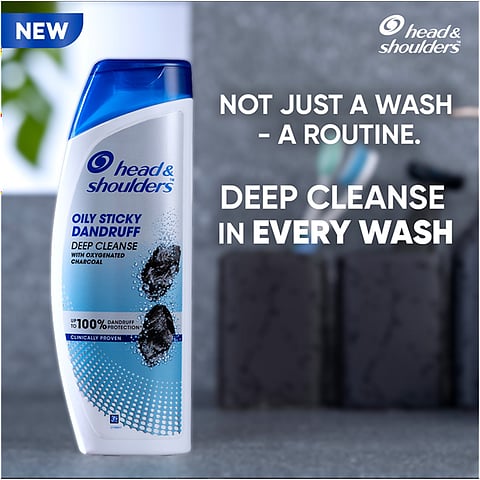
Head & Shoulders has been developed to address exactly this- both types of dandruff, at a deeper level. Clinically proven to go five layers deep into the roots, it is formulated dandruff fighting ingredients like Piroctone Olamine to stop dandruff at its source rather than simply washing away what's already visible.
What sets it apart is that it doesn't just clean the scalp, it goes deeper. The formula is designed to reach follicular pore flakes while also clearing what's visible on the surface, tackling both types at the same time. And because it works on the cause rather than just the symptom, the results hold up with regular use, not just the morning after washing.
For those dealing with dandruff alongside hair fall concerns, the Head & Shoulders Anti Hairfall Shampoo addresses both issues together. It is formulated to fight dandruff at the source while also helping to reduce hair fall- a practical choice for scalps that need care on both fronts.
Dandruff is a recurring condition, it doesn't permanently resolve after a few washes. The scalp needs consistent care to maintain the balance that keeps any type of dandruff from returning. Using a clinically proven anti-dandruff shampoo with Piroctone Olamine regularly, rather than switching back to a regular shampoo once flaking appears to subside, is what keeps the scalp environment stable over time.
Simple habits also support scalp health alongside the right shampoo- washing hair after heavy sweating, keeping helmets and hair accessories clean, and avoiding prolonged moisture on the scalp all help prevent the build-up of oil and sweat that allows Malassezia to become overactive.
For those who prefer a refreshing scalp experience alongside their anti-dandruff routine, the Head & Shoulders Cool Menthol Shampoo delivers clinically proven anti-dandruff action with a cooling menthol formula that leaves the scalp feeling clean and refreshed after every wash.
Dandruff is more complex than it looks. With two distinct types of dandruff at different levels of the scalp, effective treatment requires a shampoo that goes beyond the surface, deep into the roots. That is the standard Head & Shoulders is built on, and the reason it remains one of the most trusted names in scalp care. Because when it comes to dandruff, surface-level solutions only ever solve half the problem.
Disclaimer: This content is part of a marketing initiative.