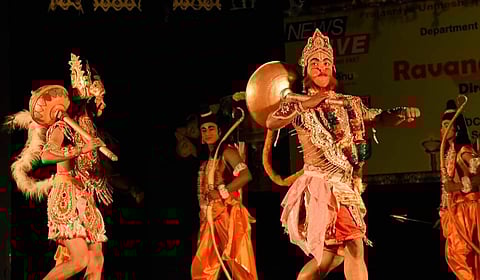

GUWAHATI: From the chatter of women and the laughter of village children in Assam’s river island Majuli, “Bhaona” is set to entertain the more urbane audiences in Dubai and the US.
Prajanmya Unmesh, a socio-cultural organisation in Assam, will stage the Assamese mythological folk theatre in Dubai next month. The plays will be staged in English, primarily to take Assamese culture and identity to the world stage.
A creation of sixteenth-century saint-reformer Srimanta Sankardeva, Bhaona is a traditional form of entertainment in Assamese and Brajavali languages. He created the form, usually staged in “namghars” (places of worship) and “xatras” (Vaishnavite monasteries), to convey religious messages to villagers through entertainment. The special features of Bhaona include plays, dialogues, dances, costumes, ornaments, entry and foot-steps of characters. Majuli is the centre of Assam’s Vaishnavite culture and Bhaona.
That Bhaona can be taken to global audiences was conceptualised by Arup Saikia and his two sisters, Girimallika Saikia and Gitimallika Baidya. The family hails from Jamugurihat in northern Assam’s Sonitpur district.
“Our father, the late Padma Saikia, was a teacher, social worker and an actor who had improvised his acting in Bhaona. I inherited acting from him. Our mother, Hemalata Saikia, is the vice-president of Sankardeva Aaimatri Samaj. She also serves in the same post in Barochohoriya Bhaona committee,” Arup Saikia told this newspaper.

He said the suggestion about Bhaona in English had come from his sisters and in due course, the English Bhaona was staged in Delhi and Mumbai.
“Our main objective has been to highlight the rich treasure of Assamese culture and identity without any deviation from roots. We keep the roots and themes of Bhaona intact. The themes are Mahabharata, Ramayana and Sankardeva’s Ankiya Naats. Secondly, we try to promote Sankardeva, that he was no less than the other saints of the country,” Saikia, a businessman, said.
Stating that they are followers of Sankardeva, not just in religion but in other aspects of life, he said the plays in some countries that he watched were “inferior” to that of Bhaona, yet they were popular.
“Bhaona has a rich musical property but due to language barrier, it hasn’t yet become popular beyond Assam. This is another reason why we have taken English as the medium. It will help people, including the second and third generation Assamese living abroad, judge and compare Bhaona with opera. We thought the songs in Bhaona are sweeter,” Saikia said.
The Prajanmya Unmesh has around 45 members, including a Muslim. Gitimallika, who takes care of the part of coordination along with Girimallika, said they have plans to take Bhaona to the US next.
“We all contribute to take Bhaona beyond Assam. The state government said it will help us but the help hasn’t come yet,” Gitimallika said.