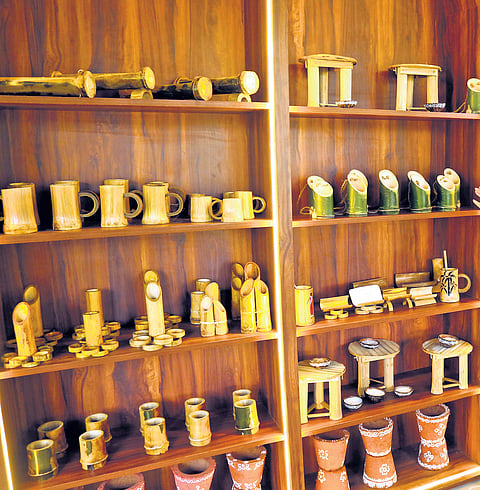

VISAKHAPATNAM: The Eastern Ghats Biodiversity Centre (EGBC), located within Kambalakonda Wildlife Sanctuary in Visakhapatnam, is setting an example of sustainability and community empowerment through its Vana Sampada workshop. Located within the Kambalakonda Wildlife Sanctuary, Vana Sampada provides a platform for tribal women from Sambhuvanipalem village to craft eco-friendly products for both everyday use and special occasions. Spanning 30 acres, EGBC has transformed from a modest nursery into a thriving biodiversity hub, thanks to the dedication of the Visakhapatnam Forest Department and the vision of IFS officer Anant Shankar and Sub DFO Dharma Rakshith.
The centre has partnered with Be Earthly, a social enterprise founded by Manasa Tinnanuri and Spandana Ancha, with an aim to broaden their reach and promote its eco-friendly products globally. The mission of Be Earthly is to empower tribal women through skill development programmes and to showcase their sustainable creations to a wider audience. “Our main motto is to take their eco-friendly products to a wider audience through our startup, Be Earthly,” stated the founders.
This partnership seeks to provide tribal women with a sustainable source of income and enhance their craftsmanship skills as well as promote eco-friendly products and boost tourism at the EGBC. “We invite businesses, corporate leaders, entrepreneurs, event management agencies, restaurants, hotels, and hospitality services to support tribal community empowerment. By ordering customised products in bulk from our centre, they will contribute to the economic uplift of tribal communities and make a positive impact on their lives,” explained Manasa.

With Vinayaka Chaviti approaching in 45 days, the EGBC has introduced an innovative twist to traditional clay idols. These idols, crafted from clay containing seed balls, come with a fertiliser pot made of clay and cow dung. After the festival, instead of immersing the idols in local water bodies, they can be planted in the provided pots, allowing the seeds to grow into plants. This approach helps reduce water pollution and promotes greenery. “Using cow dung leverages its nutrient-rich properties for plant growth as it decomposes,” explained the tribal women involved in the project.
The Vana Sampada workshop also transforms raw materials into a variety of eco-friendly products, including plant pots, bamboo crafts, natural dye art, and Dhokra art. These creations range from sustainable art pieces to jewellery, bags, and other accessories.