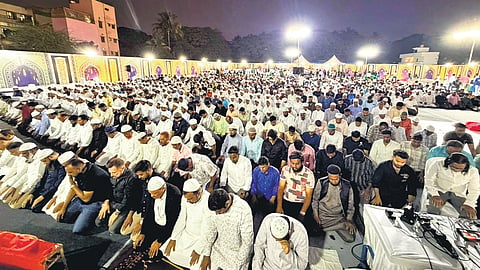

BENGALURU: Amid the spiritual discipline of fasting, the month of Ramzan is quietly transforming into a season for building bridges across the state.
Interfaith iftar gatherings are emerging as potent platforms where mistrust gives way to mutual respect, broken bonds mend and communities rediscover shared humanity. On Tuesday, the historic Ulsoor Gurdwara Sahib in Bengaluru opened its doors for an inclusive iftar. Hundreds of non-Sikhs and non-Muslims joined Sikh and Muslim hosts, breaking fast together.
Jamaat-e-Islami Hind National Secretary Syed Tanveer Ahmed, a key mover behind the initiative, said, “We have encouraged mosque committees, social organisations and individuals to host inclusive iftars. Whether it’s a shared meal, a guided mosque visit to dispel misconceptions, or post-Eid community celebrations, the goal remains the same — replace suspicion and division with mutual respect and understanding.”
In Bengaluru’s Gangenahalli, RT Nagar, a local mosque committee welcomed diverse participants to an iftar. Shantinagar MLA and BDA Chairman NA Haris hosted a large-scale event in Austin Town, drawing hundreds from different faiths to share the evening meal. Dr Taha Mateen, an office-bearer with Jamaat-e-Islami, said,
“Ramzan is a time for spiritual cleansing, seeking forgiveness, and restoring neglected responsibilities — including mending broken friendships and relationships. In an era of invisible walls that isolate us and too often turn into hatred, the humane spirit of Ramadan reminds us we cannot be complete without reconciling with our neighbours, colleagues and fellow citizens.”

He said these peace meetings actively dispel mistrust and hate, turning the month into an opportunity for compassion, kindness, and caring for the underprivileged.
A former chief secretary of Karnataka, recalling his time in Libya, said, “At iftar time, every house’s front door would be open. People on the street would simply enter any home and break their fast together. This is the true openness of heart and hearth that builds great societies and nations.”
In Basavana Bagewadi, the birthplace of 12th century reformer Basavanna, a joint “Iftar Souharda Koot” (Harmonious Iftar), organised by the Rashtriya Basava Sainya and Jamaat-e-Islami two days ago, hit the message home.
Founder-president Shankaragouda Biradar said, “Though religious practices differ, the core message of humanity and harmony is one. Basavanna’s teachings and Islam’s spirit of brotherhood both unite society.” As Ramzan progresses (with Eid expected on March 18 or 19), more open celebrations are planned to extend the spirit of reconciliation. These humble iftar tables are proving that fasting together — and sharing a meal — can heal wounds, dissolve barriers, and build a more compassionate Karnataka, one sunset at a time.