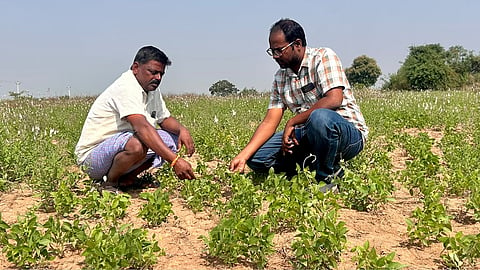

SIDDIPET: While El Nino threatens to leave farmers across the country facing an uncertain future, a farmer in a remote Telangana village is making good profits by following the advice of agriculture officials and switching from paddy to horse gram.
Kola Kanakaiah of Pedda Masanpally village in Toguta mandal had initially considered cultivating paddy like many other farmers. However, he met Agriculture Extension Officer (AEO) Nagarjuna, who advised him to grow horse gram, citing its ability to withstand drought and survive on minimal soil moisture.
Kanakaiah cultivated horse gram on two acres last year, investing about Rs 10,000. He harvested six quintals and sold the produce at Rs 7,000 per quintal, earning a profit of Rs 32,000 after expenses. Encouraged by the returns, he has expanded cultivation to four acres this year and is hopeful of a good harvest.
Nagarjuna said horse gram was highly drought-tolerant and suitable for low-rainfall areas. It required little water and chemical fertiliser, had low pest and disease incidence and could grow in poor soils using residual moisture. It also withstood high temperatures.
The crop, he said, contributed to climate mitigation by fixing 40-60 kg of atmospheric nitrogen per hectare, reducing dependence on chemical fertilisers and improving soil organic carbon through its deep-root system. It could also be used as green manure to improve soil structure.
Kanakaiah said horse gram helped farmers minimise the risk of crop failure due to adverse weather while improving productivity and livelihood security. With low input costs and the added benefit of grain and fodder, it offered a viable option for dryland farmers, he said.
