
NEW DELHI: In the name of fake IT and customer-service job offers, youths from Indian are systematically trafficked to cyber scam compounds in Myanmar, Lao PDR and Cambodia, according to India law enforcement agencies submission to the Asia/Pacific Group on Money Laundering (APG) report on cyber scam hubs and human trafficking.
The report states that these victims once they land in cyber fraud slavery compounds were subjected to electric shocks, confinement in dark or isolation rooms, physical abuse, fines and psychological torture to enforce compliance.
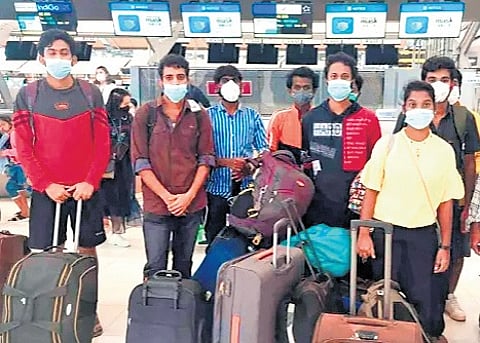
The victims, repatriated between 2023 and 2024, from nine states across the country, aged between 20 and 35, during interrogation before law enforcement agencies revealed that they were lured with promises of monthly wages of Rs 50,000 to 70,000, transited through Thailand, and coerced into working inside scam compounds after arrival.
The report, "Cyber Scam Hubs and Human Trafficking," draws on case studies submitted by law enforcement and financial intelligence agencies documents multi-state mule networks, SIM-card trafficking rings and hawala-crypto conversion chains linked to scam centres in Cambodia, Myanmar and Lao PDR.
The 73 per cent of victims were approached through personal connections and 27 per cent via social media, with every case involving upfront fees of Rs 50,000-70,000 paid in cash or online that immediately placed victims in debt bondage to their traffickers.
The agents handed the victims to foreign sub-agents who were taxi operators in Cambodia, local facilitators in Lao PDR with all victims travelling on tourist visas that concealed the true purpose of their trip.
The report finds Cambodia's visa-on-arrival policy made it the preferred entry point, accounting for 60 per cent of documented transit routes through Thailand, with roughly 80 per cent of all routes including a stopover in Bangkok.
A pattern involved pickups by local taxi on arrival and then taken to cyber fraud compound within one to two days.
Once inside the compounds, they found that these are controlled by Chinese-speaking diaspora. The workforces trapped were Indian, African, South Asian and Southeast Asian nationals. The victims had their passports confiscated and were made to work 12-16 hour shifts after two to three days of training.
The victims were forced into six categories of cybercrime that is investment, trading, romance, digital-arrest, law-enforcement impersonation, social media and gaming scams. This was followed "pig-butchering" model of gradual enticement enforced through daily quotas. In case daily quota were not met they were subjected to punishment.
The punishment includes electric shocks (33 per cent of cases), confinement in dark or isolation rooms (33 per cent), physical abuse (33 per cent), fines (20 per cent) and psychological torture (13 per cent), with tactics escalating from psychological to physical pressure to enforce compliance.
“Further, the syndicate involved in the procurement and export of bank accounts and SIM cards from India to handlers operating in these countries. The syndicate established a supply chain that provided pre-activated bank kits and SIM cards to foreign-based Indian nationals engaged in online cyber-fraud,” the report stated. Funds were received from victims across India through UPI and IMPS transfers and were quickly transferred to new beneficiary accounts or crypto exchanges.
The methods perpetrator use to keep the participants against their will include confiscating their passports, demands for ransom or repayment of debt if request to leave, violence, torture, threats, handcuffing, 24-hour surveillance (including armed guards monitoring facilities and internet and phone usage strictly monitored) and remote physical location (jungle, desert, etc. which also makes it difficult for victims to raise alarm or seek assistance).
Victims also reported include beatings, stress positions, starvation and deprivation of basic necessities including sleep, forced exercise, electric shocks, and ‘public punishments’ including being filmed to intimidate other victims. There were specific ‘torture rooms’ or floors within cyber scam hubs. Further, many victims are coerced into remaining in the hubs through fear of violence or threats to their families.
The APG project, co-led by Indonesia and the UN Office on Drugs and Crime, had surveyed 17 public sector agencies across the Asia/Pacific region on the trafficking and money-laundering dimensions of cyber scam hubs.
