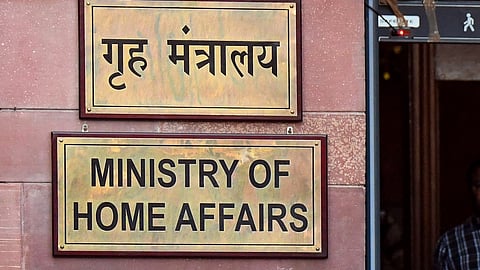

NEW DELHI: India has brought back 274 fugitive criminals from 36 countries between 2021 and 2026, marking a significant increase in extradition and deportation efforts under the government’s intelligence-led strategy to track down offenders hiding abroad, the Union Ministry of Home Affairs (MHA) said on Tuesday.
The MHA said the government has strengthened its legal and institutional framework to combat fugitives through measures such as the Fugitive Economic Offenders Act, 2018 and an integrated, technology-driven approach combining intelligence gathering, global cooperation and diplomatic engagement.
According to the MHA, India had extradition treaties with only 37 countries before 2014 and lacked a dedicated law to deal with economic fugitives or confiscate their assets. Between 2004 and 2013, the country secured the extradition of only four fugitives annually on average, while 110 extradition requests remained pending.
It said the present government has made the return of fugitives a national priority by expanding international cooperation, strengthening inter-agency coordination and deploying advanced technology to trace offenders abroad.
Home Minister Amit Shah said a three-pronged strategy centred on global outreach, robust coordination and smart diplomacy had transformed India’s ability to bring fugitives back to face justice. He described fugitive offenders as a threat to the country's sovereignty, economic stability, law and order, and national security.
“Gone are the days when criminals were allowed to exploit gaps in the system. New India has plugged those gaps through new laws, institutions and global partnerships, creating an unbreachable security net,” Shah said.
He added that intelligence-led operations have enabled agencies to pursue fugitives across the world, while the provision for trial in absentia under the country's three new criminal laws has strengthened the justice system's ability to proceed against absconding offenders.
Shah also said stringent enforcement under the Prevention of Money Laundering Act (PMLA) has resulted in the confiscation of assets of fugitive criminals worth Rs 17,874 crore and restitution of Rs 18,762 crore including funds recovered from economic offenders, who had fled the country. He credited new coordination mechanisms, including BHARATPOL, with improving information sharing among law enforcement agencies globally.
The MHA said the issuance of INTERPOL Red Corner Notices has risen significantly over the past three years, with notices issued against 401 fugitive criminals. It also highlighted the role of Operation Trishul, which uses satellite technology, digital footprints, surveillance inputs and profile mapping to trace fugitives who change their identities while hiding overseas. Video conferencing has also been used to expedite extradition proceedings.
The fugitives brought back to India are wanted in cases involving terrorism, organised crime, financial fraud, narcotics trafficking, murder, rape and offences under the Protection of Children from Sexual Offences (POCSO) Act. Among the high-profile extraditions cited by the government is that of Tahawwur Hussain Rana from the United States.
The MHA said the success of these efforts has been driven by coordinated action involving the Intelligence Bureau, Central Bureau of Investigation, Research and Analysis Wing, National Investigation Agency, Enforcement Directorate, Ministry of External Affairs, Narcotics Control Bureau, Directorate General of GST Intelligence and state police forces.
To further strengthen India’s fugitive management framework, the Ministry said a Standing Focus Group under the Multi Agency Centre (MAC) was set up in January 2026 to enhance coordination and accelerate action against absconding criminals.
