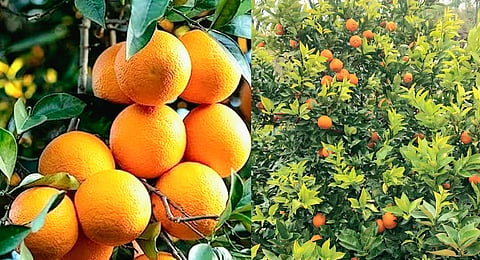

DEHRADUN: Uttarakhand’s juicy Malta orange, long sold as an ordinary seasonal fruit, is set to enter India’s expanding organic market as the state prepares to certify its key hill production belts for the first time. The move could eventually open up export opportunities as well.
Officials say the certification drive could transform a naturally grown crop into a premium product, helping growers secure better prices, build a distinct Uttarakhand brand and access organised retail chains in major Indian cities as well as overseas markets.
Malta is cultivated extensively across the hill districts of Almora, Nainital, Bageshwar, Pithoragarh, Champawat, Rudraprayag, Chamoli, Tehri, Pauri and Dehradun. The region’s altitude, cool climate and natural growing conditions give the fruit its characteristic sweetness, high juice content and rich citrus aroma.
Despite steady demand in local markets, the fruit has struggled to gain wider recognition. Most hill farmers follow traditional, low-chemical cultivation practices but lack formal certification. Without it, their produce cannot legally be marketed as organic and typically fetches conventional market prices.
"Our objective is to ensure that farmers receive better prices for their produce," Agriculture and Horticulture Secretary S N Pandey said. "We are focusing on organic certification, quality improvement, branding and market linkages. Certified organic products can play an important role in increasing farmers' incomes."
The proposed initiative will link identified Malta-growing clusters with the certification system, which verifies cultivation practices, inputs and traceability. Department specialists believe certified fruit could command a premium over conventionally marketed oranges, particularly as consumer demand for chemical-free food continues to rise in India and abroad.
Much of Uttarakhand's Malta crop is rain-fed and grown using significantly lower quantities of chemical fertilisers and pesticides than fruit cultivated in the plains. Officials say this gives the state a natural advantage, although farmers must still comply with prescribed organic standards to obtain certification.
The initiative forms part of the state government's broader push to promote natural and organic farming. Recent programmes have encouraged chemical-free cultivation, strengthened farmer producer organisations and promoted processing and other value-addition activities. Fruit and vegetable clusters are now being brought under the certification framework.
Department specialists said certification would give farmers access to better-paying markets, while produce meeting organic standards could command premium prices. They added that collective branding and consistent quality would be critical to succeeding in competitive domestic and international markets.
For growers, the initiative could mark a shift from distress sales in local mandis to higher-value supply chains. However, its success will depend on rigorous certification, aggregation, packaging, processing and reliable market linkages beyond Uttarakhand. If implemented effectively, officials believe the organic label could finally enable the hill state's distinctive Malta orange to translate its unique taste into stronger farm-gate returns.
