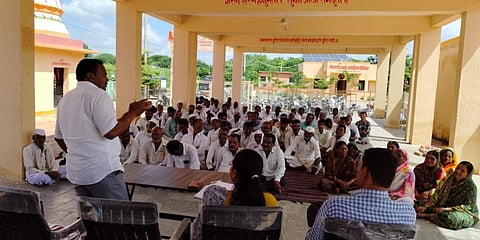

RAIPUR: A recent study report by the National Institute of Rural Development and Panchayati Raj (NIRDPR) reveals a contrasting picture of rural governance in Chhattisgarh. While awareness, women’s leadership, and basic digital infrastructure have seen remarkable progress, serious gaps remain apparent regarding quorum fulfilment, youth participation, transparency, and decision execution.
According to the report, awareness of Gram Sabhas across rural Chhattisgarh is notably high. 98.8% of rural residents are aware of Gram Sabhas and 95.18% know their rights within these assemblies. Over 90% claim active participation in meetings while 82% are aware of quorum requirements.
Interestingly, Chhattisgarh excels significantly in social inclusion. Nearly 90% of respondents recognised active participation by women, and over 96% acknowledged a strong presence of SC and ST communities. Furthermore, over 80% of panchayats reported having women sarpanches or prominent female leaders.
The report highlights strengths and deficits in Chhattisgarh’s rural governance.
Despite high participation claims, the ground reality points to critical execution hurdles. Despite awareness exceeding 90%, actual attendance commonly fails to meet the required quorum across multiple locations. Youth, senior citizens, and migrant families generally remain disconnected from Gram Sabha proceedings. Many meetings are treated as mere formalities without meaningful engagement or impactful decision-making. Questions remain over the transparency and actual execution of decisions taken during meetings.
Chhattisgarh has nevertheless made commendable strides in equipping Panchayats with modern digital tools compared to other Indian states.
Internet connectivity has 64.0% availability suggesting satisfactory performance alongside Tripura, Andhra Pradesh, Gujarat, and Odisha.
Video conferencing has 33.9% availability in the state, performing well alongside Kerala, Odisha, Sikkim, and Tripura. Digital records have 34.6% availability. Over 79% adoption of social media and WhatsApp is seen for village communication.
However, key infrastructure deficits persist. Only 41.7% of respondents felt the Gram Sabha hall capacity was sufficient, while audio-visual projection facilities stand at a critically low 8.3% (overall regional average at 29.2%), impacting the presentation quality and effectiveness of rural assembly meetings.
