
NEW DELHI: India on Monday rejected the "so-called" award issued by the Court of Arbitration on the Indus Waters Treaty and termed the tribunal "illegally constituted," asserting that its pronouncements have no bearing on India’s sovereign decisions.
The Ministry of External Affairs (MEA) said the arbitration body was established by the World Bank in "patent breach" of the terms of the 1960 treaty. India, it said, has never recognised the legal existence of the tribunal and has consistently refused to participate in its proceedings.
"This so-called Court of Arbitration has no jurisdiction whatsoever to pronounce on India’s sovereign decisions," the MEA said.
"Its pronouncements, now or in the future, will have no effect on India’s actions in connection with the projects being undertaken by India. India’s decision to hold the Indus Waters Treaty in abeyance remains in force," the MEA added.
The statement came after the Hague-based Permanent Court of Arbitration said the Indus Waters Treaty remained fully in force and that India must continue to meet its obligations under the agreement, including restrictions governing the design and operation of hydroelectric projects on the western rivers.
"India must observe its obligations under the Treaty, including those relating to the design and operation of its hydro-electric projects on the Western Rivers," the court said.
A day after the Pahalgam terror attack that killed 26 civilians in April 2025, India announced a series of punitive measures against Pakistan, including putting the Indus Waters Treaty in abeyance.
The Court of Arbitration, however, rejected the position that India could suspend the treaty, saying New Delhi had no justification for ending or suspending the agreement.
India, however, maintained that its decision to place the treaty "in abeyance" remains unchanged. The government has previously linked the move to cross-border terrorism and has reiterated the principle that "blood and water cannot flow together."
The 1960 treaty, brokered by the World Bank, governs the sharing of the Indus river system between India and Pakistan. It gives India rights over the eastern rivers — Ravi, Beas and Sutlej, while allocating the western rivers — Indus, Jhelum and Chenab, primarily to Pakistan, subject to specified provisions.
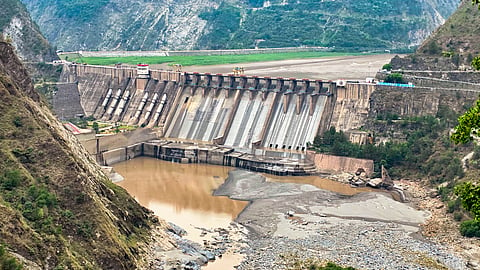
The latest ruling follows a long-running dispute over India's Kishenganga and Ratle hydroelectric projects. Pakistan had sought arbitration over objections to the projects, while India has consistently opposed the Court of Arbitration proceedings and instead recognised the separate neutral-expert mechanism under the treaty.
India had rejected an earlier ruling by the same body in May concerning the maximum pondage permitted at its hydroelectric projects, maintaining that proceedings and decisions by the body were null and void.
