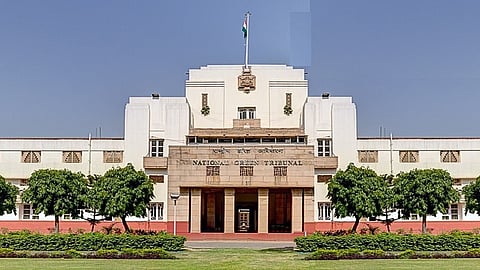

CHANDIGARH: The National Green Tribunal (NGT) has expressed serious concern over shortcomings in Himachal Pradesh's solid and liquid waste management systems and directed the state government to take time-bound measures to address untreated sewage, poor sewer connectivity and unscientific waste disposal across urban and rural areas.
Recognising Himachal Pradesh as one of India's most ecologically sensitive Himalayan states and the source of major rivers such as the Yamuna, Sutlej, Beas and Ravi, the tribunal issued 32 comprehensive directions to ensure sustainable compliance with environmental laws.
The NGT also noted the existence of 295 identified waste dumping hotspots across the state, including 28 in Shimla.
The bench, headed by Chairperson Justice Prakash Shrivastava and Expert Members Dr A. Senthil Vel and Dr Afroz Ahmad, issued the directions on May 25 while reviewing the sixth six-monthly compliance report on the implementation of waste management rules submitted by former chief secretary Sanjay Gupta on May 15.
A detailed 24-page order was released on Saturday.
The bench observed that the state continues to face significant deficiencies in scientific waste management and sewage treatment, posing serious risks to public health and the fragile Himalayan ecosystem.
It noted that the discharge of untreated sewage poses a serious environmental threat with potentially irreversible consequences.
"Environmental compliance cannot be measured merely by the construction of infrastructure. Success must be judged by whether every household is connected to a sewer network, whether rivers receive clean water instead of untreated sewage, and whether waste is scientifically managed throughout the state," the tribunal observed.
The bench also expressed concern over rural waste management, observing that nearly 44.67 per cent of the solid waste generated in rural areas remains unprocessed, raising concerns over open dumping in environmentally sensitive regions.
It noted that more than 30 urban local bodies (ULBs), including Bilaspur, Nahan and Banikhet, have reported no household sewer connections despite having sewerage infrastructure.
The tribunal further observed that 20 sewage treatment plants (STPs) were not complying with prescribed effluent standards and that some facilities were operating without valid statutory consent.
The Himachal Pradesh Pollution Control Board (HPPCB) has been directed to identify all STPs operating without valid consent, recover outstanding environmental compensation from non-compliant facilities and initiate prosecution under the Water (Prevention and Control of Pollution) Act, 1974 against persistent violators.
The tribunal also directed district magistrates to eliminate all identified garbage hotspots through regular monitoring, enforcement measures, user charges and penalties against violators.
Among the 32 directions, the tribunal instructed the district magistrates of all 12 districts to ensure the creation of land banks for each of the state's 76 urban local bodies after assessing land requirements so that waste processing and disposal infrastructure is not delayed.
It also directed that buffer zones be maintained around solid waste processing and disposal facilities in accordance with the Municipal Solid Waste Rules, 2016, prohibited open burning and dumping of solid waste, and called for a large-scale afforestation programme using native tree species along both sides of stormwater drains in urban and rural areas.
On liquid waste management, the bench observed that Himachal Pradesh generates approximately 159.117 million litres of sewage per day (MLD), while only 88.293 MLD is treated.
As a result, around 44.5 per cent of the sewage generated in the state is discharged untreated into rivers, streams, lakes and other natural water bodies.
The NGT directed the Himachal Pradesh Chief Secretary to submit a comprehensive compliance report addressing all the directions. The matter has been listed for hearing on January 20, 2027.
In its fifth six-monthly status report covering August 2025 to February 2026 on the implementation of the Solid Waste Management Rules, 2016, and sewage management, the state government acknowledged that 100 per cent of the municipal solid waste generated in the state is neither fully collected nor scientifically processed.
It also admitted that littered waste continues to remain uncleared at several locations, including hill slopes, tourist destinations, vending zones and identified garbage hotspots.
According to the report, urban areas in Himachal Pradesh generate 420.82 tonnes of municipal solid waste every day, of which 20.48 tonnes remain uncollected.
