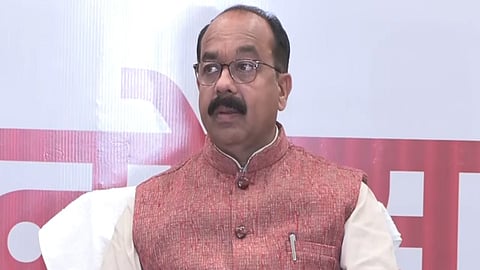

RAIPUR: Chhattisgarh Deputy Chief Minister Arun Sao informed that the committee formed to seek recommendations on implementing the Uniform Civil Code (UCC) in Chhattisgarh will hold its inaugural meeting on July 24.
The BJP-ruled Chhattisgarh government last month initiated the process to draft and implement a Uniform Civil Code (UCC) in the state.
The government constituted a high-profile, five-member committee, spearheaded by Justice (Retd.) Ranjana Prakash Desai as Chairperson, tasked with reviewing current legal frameworks and drafting a comprehensive blueprint as a roadmap for the UCC.
Sao, countering Congress' allegations, affirmed that the government has repeatedly clarified that the tribal community will not face any issues due to the Uniform Civil Code. The opposition Congress claimed, “the move will dilute the rights of Tribals who constitute 32% of the state population".
Sao emphasised that the process is moving forward in full alignment with the spirit of the Constitution. The committee, led by a former Supreme Court judge, will draft its recommendations and submit them to the state government.
Launching a sharp attack on the Congress party, the Deputy CM remarked that the opposition has no real issues to raise and is merely spreading confusion and misinforming the public.
Reacting strongly, Chhattisgarh Pradesh Congress Committee President Deepak Baij claimed that implementing the Uniform Civil Code (UCC) in the state would inflict the maximum damage on the tribal population.
Baij described the UCC as directly anti-tribal, arguing that tribals are the only group in the state holding special constitutional protections under the Fifth Schedule and the PESA Act. Tribals make up over 32% of Chhattisgarh's total population.
The official notification, issued and signed last month by Avinash Champawat, Secretary of the General Administration Department, outlines a sweeping, hard-hitting mandate for the panel.
The committee is legally authorised to evaluate the current legal landscape governing personal laws in the state of Chhattisgarh, formulate statutory recommendations covering highly sensitive and legally diverse domains—including marriage, divorce, alimony, inheritance, and adoption— actively seek and integrate feedback from common citizens, social organisations, legal luminaries, and various key stakeholders, analyse and study existing UCC models and legislative frameworks active or proposed in other Indian states and draft the final Uniform Civil Code text, submitting it alongside comprehensive legislative and administrative action plans directly to the state government.
