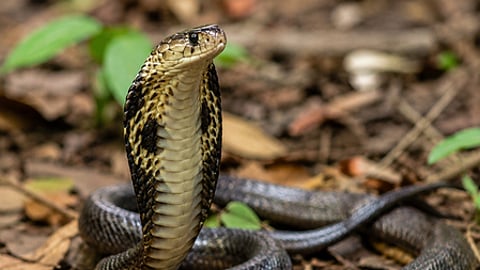

DEHRADUN: Hospitals in Uttarakhand's capital are reporting a sharp rise in snakebite cases, with doctors warning that venomous snakes active ahead of winter dormancy are causing severe neurological complications and kidney damage.
Doon Hospital is currently receiving around 15 snakebite patients every month, nearly five times the usual monthly average of two to three cases, hospital authorities said.
Doctors said a patient admitted on Friday suffered acute kidney damage after a snakebite. The patient's kidneys stopped functioning, requiring dialysis. Medical examination indicated that the bite was from a snake carrying haemotoxic venom.
“Snake venom broadly affects the human body in two ways,” Dr Harish Basera, senior physician at Doon Hospital, said.
“Neurotoxic venom attacks the nervous system and disrupts communication between nerves and muscles, increasing the risk of paralysis and respiratory complications. Haemotoxic venom affects blood and body tissues and can lead to acute kidney failure,” he explained.
Doctors said the severity of envenomation depends on factors such as the amount of venom injected, the location of the bite, delay in treatment and the victim's physical condition and immunity.
Forest department sources said several medically significant venomous snakes are found in Dehradun and nearby areas, including Russell's viper, saw-scaled viper, common krait and king cobra. Vipers primarily carry haemotoxic venom, while kraits and cobras are predominantly neurotoxic.
Wildlife experts attributed the increased movement of snakes to the period before brumation, when reptiles prepare for reduced activity during winter.
“Brumation is a survival phase during which snakes become largely inactive in winter,” Dr Pradeep Mishra, senior veterinary officer at Dehradun Zoo, told TNIE.
“After emerging during the warmer months, particularly around May and June, they search for food and build energy reserves. This is also a period associated with breeding and increased movement. By around October, many snakes begin entering brumation, substantially lowering their metabolic rate, breathing and energy consumption,” he said.
Experts said increased movement before the cold season can bring snakes closer to human habitations, especially in areas near forests, farms, vacant plots and drains.
Dr Amit Arun, emergency medical officer at Doon Hospital, confirmed the fivefold rise in cases. “We have ensured an adequate supply of anti-snake venom. Snakebite patients are being treated through coordination among emergency physicians and specialists from different departments."
Doctors advised people bitten by snakes to reach a hospital immediately and avoid applying tourniquets, cutting the wound, attempting to suck out venom or relying on traditional remedies, as these practices can worsen injuries and delay life-saving treatment.
